Community-Driven QA & Management
As a two-person indie team with limited resources, traditional QA and large-scale playtesting were going to be challenging. To overcome this, I designed a community-driven QA strategy that turned our player base into an extension of our development team—entirely by choice.
I wanted to create an organic way for players to communicate with us and actively participate in the game’s development. Discord and the Steam Community Hub became our primary platforms for doing just that:
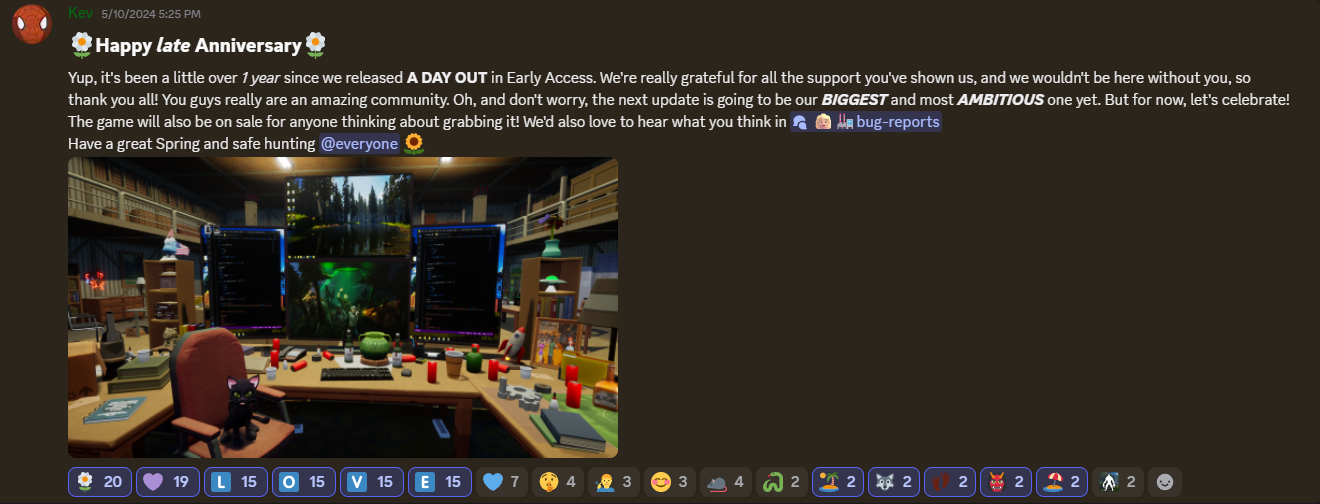
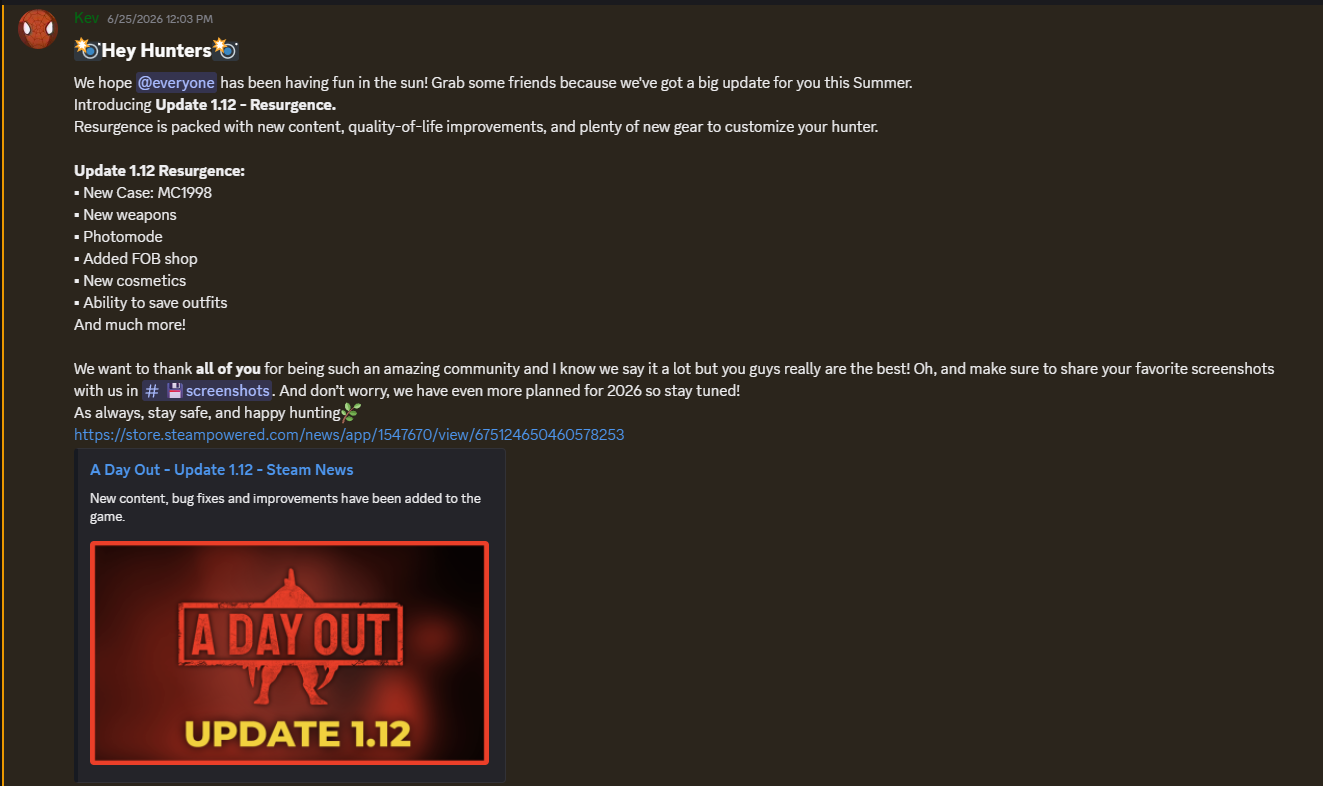
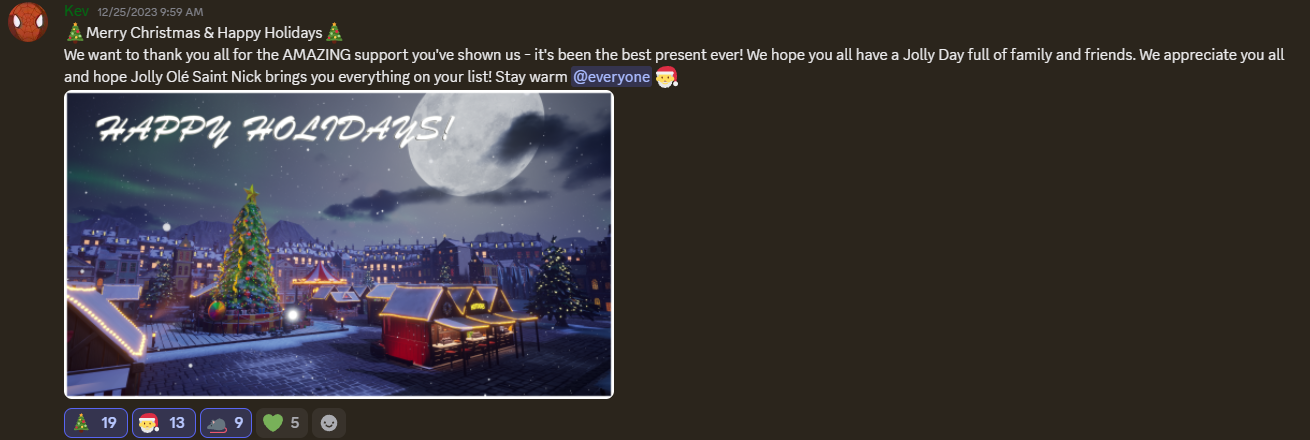
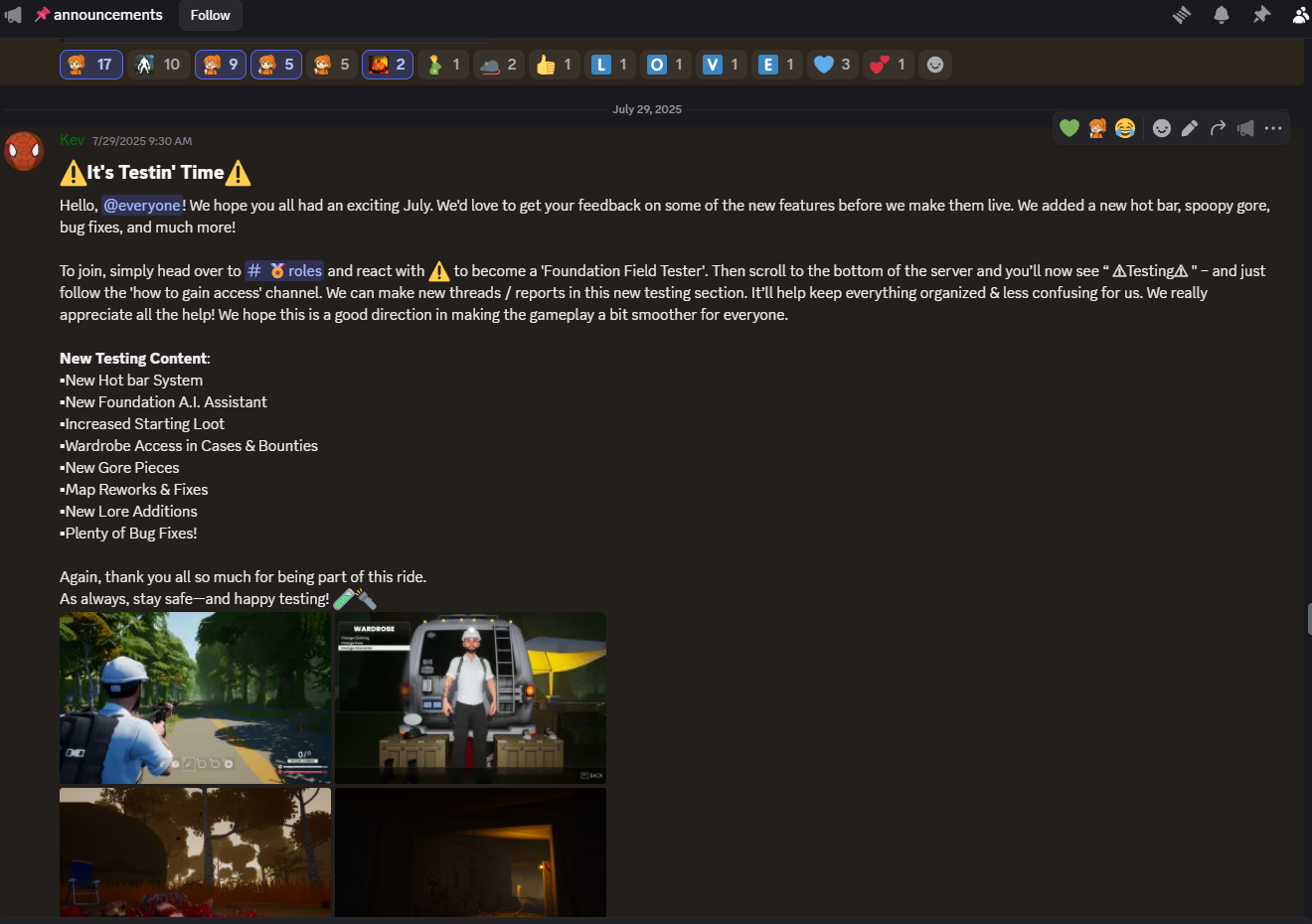
- Transparent Roadmap Announcements: Published structured update teases, patch summaries, and release schedules to keep players continuously informed and invested in the game’s development trajectory.
- Developer Play-Sessions & Live Events: Hosted coordinated Discord events tied to major game updates where we played alongside the community, streamed gameplay, and ran live Q&A sessions. These events drove immediate retention spikes for new content and gave us direct, unedited qualitative feedback from active players.
- Organic Content Support: Actively encouraged and highlighted community-created media, streams, and lore theories, cultivating a tight-knit player ecosystem that actively promoted the game organically.
By treating the community as active participants rather than simply players, we turned a major production limitation into one of our greatest strengths. Their feedback helped us catch issues earlier, refine design decisions, and better understand what players wanted from the game throughout development.
Leveraging a Community
To make our community-driven QA strategy work, I built several systems that made it easy for players to test, report, discuss, and track issues.
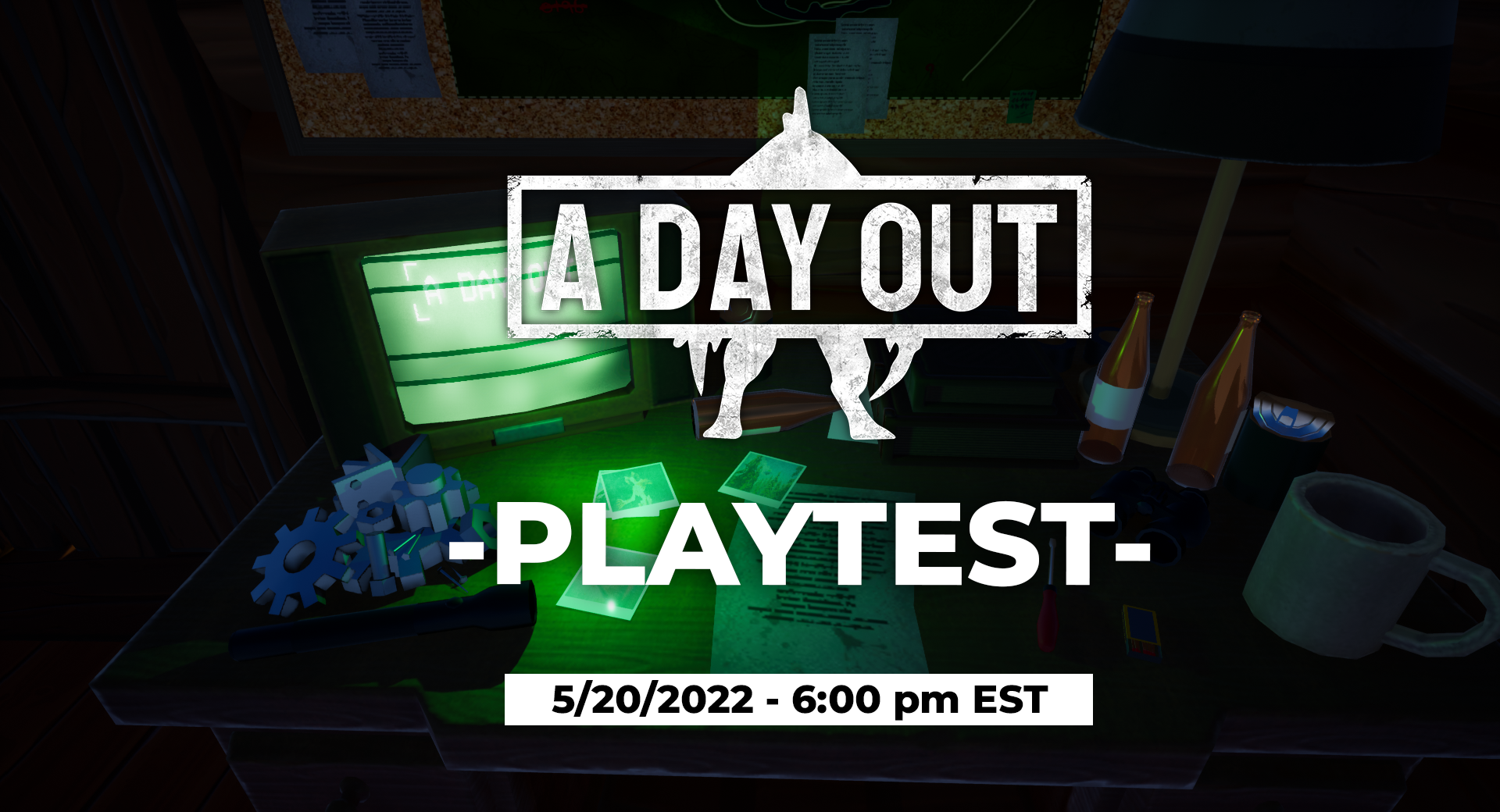
- Playtesting — Created the Foundation Field Tester role, giving volunteers access to special playtests and experimental Steam branches. I provided instructions for accessing these builds and rewarded players who consistently contributed to testing.
- Steam Community Hub — Used the Community Hub as a central place for bug reports, feature requests, and player discussions, allowing me to monitor recurring issues and gauge which requests mattered most to the community.
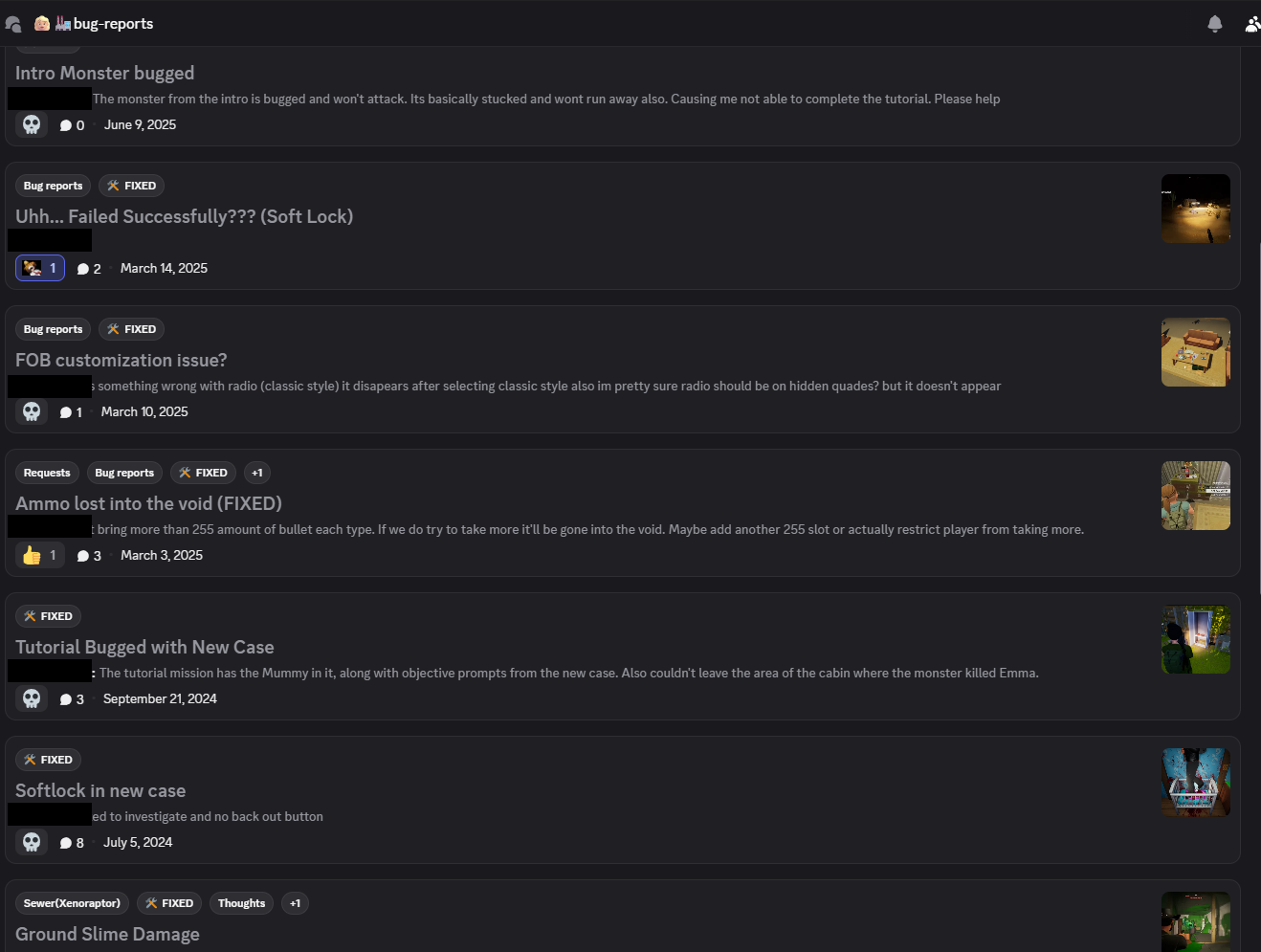
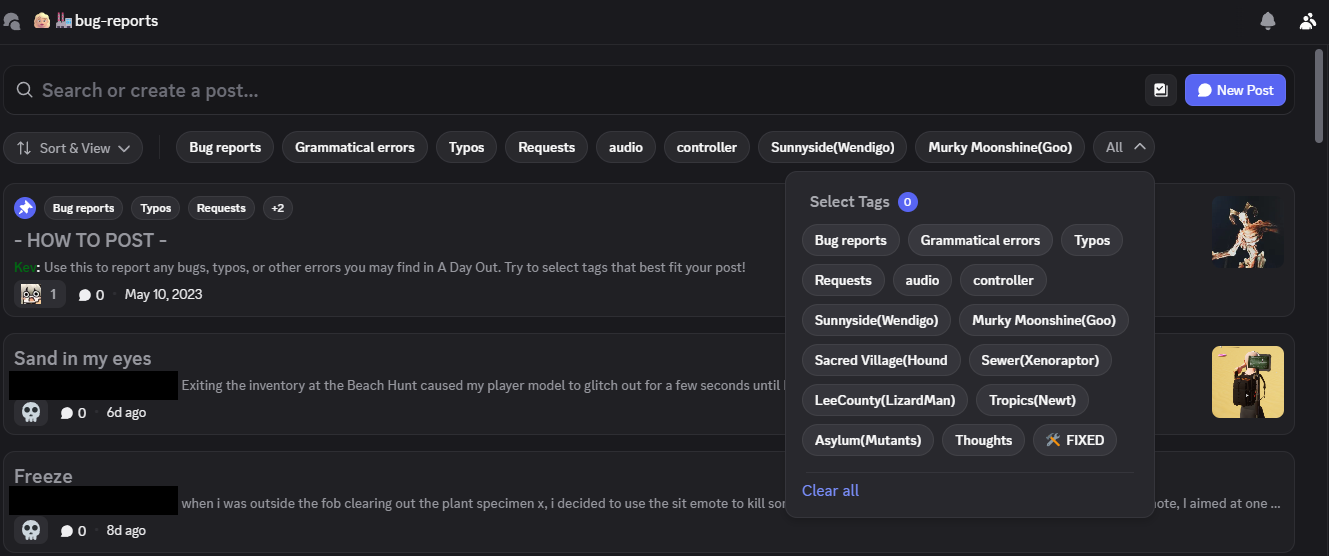
- Discord Forums — Established Discord Forums as our official bug-reporting and feature-request system. Players could tag their posts, provide additional information as they investigated an issue, and discuss reports with other members. This also made it much easier for me to track and organize feedback. I also created a “FIXED” tag which would be added to any bug that was fixed.
- Discord Roles — Created specialized roles to recognize community contributions. The Foundation Field Tester role identified active testers, while the rare Bug Zapper role was awarded to players who reported bugs that were later fixed.
I made reviewing these channels part of my daily workflow, compiling new bugs and requests and prioritizing them based on severity, frequency, and player demand. This helped ensure each update addressed the issues that mattered most while making the community feel heard and involved in the development process.
The community ultimately became more than a QA resource. Their feedback helped us maintain the quality of the game, shape future updates, and stay motivated throughout development. That involvement also led to a growing amount of community-created content, which became an important part of A DAY OUT’s identity.
Community Created Content
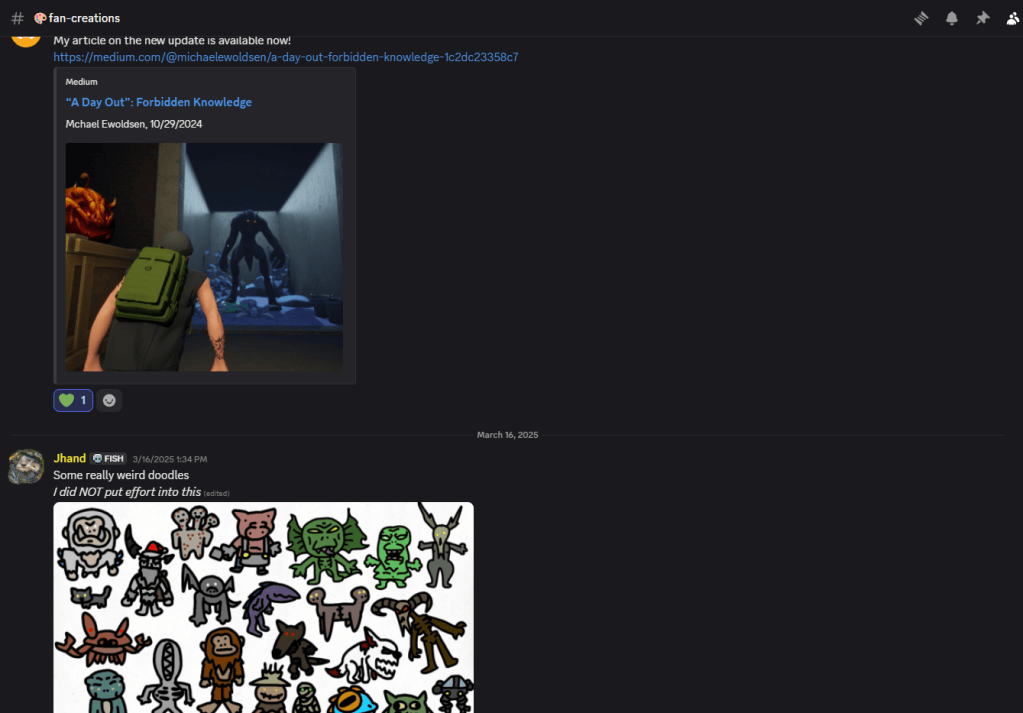
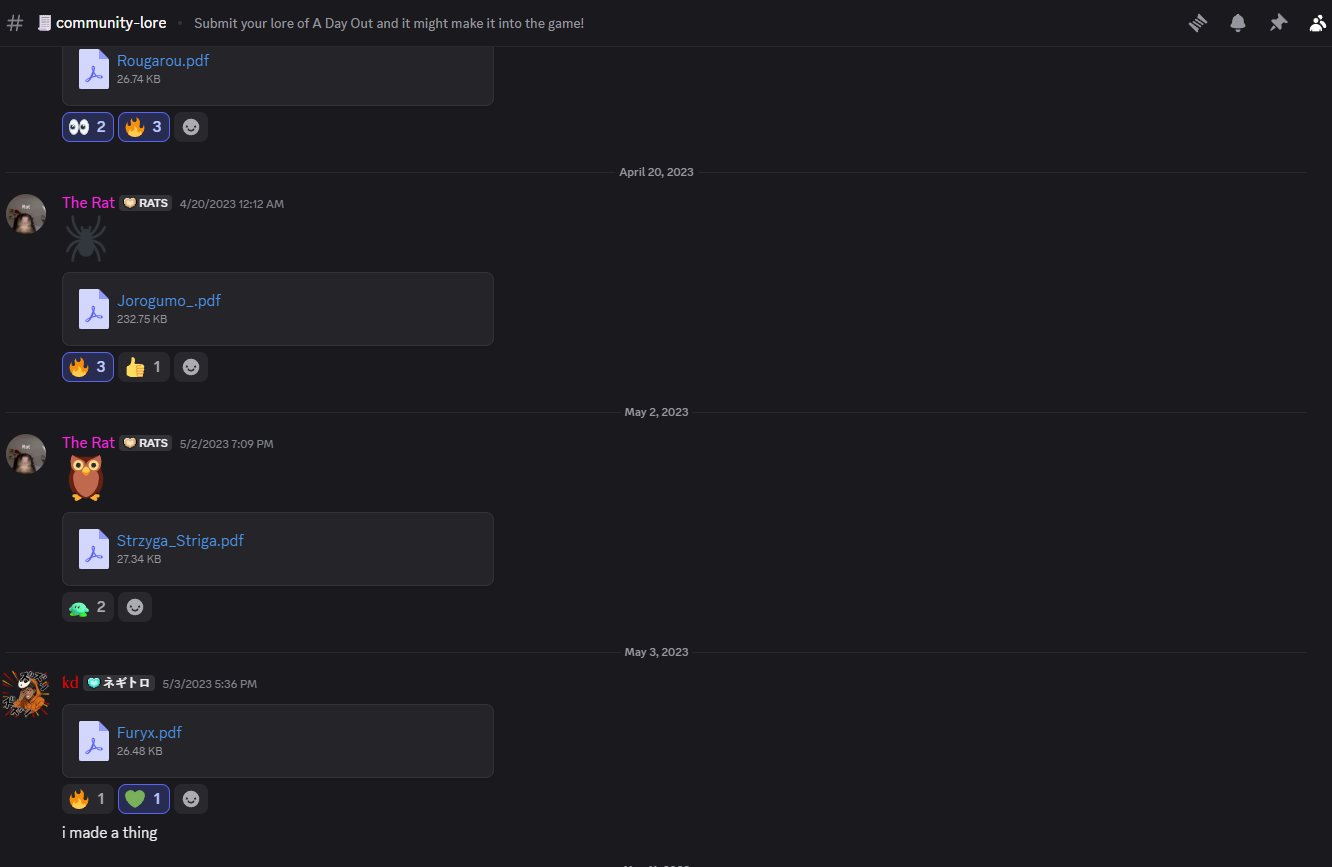
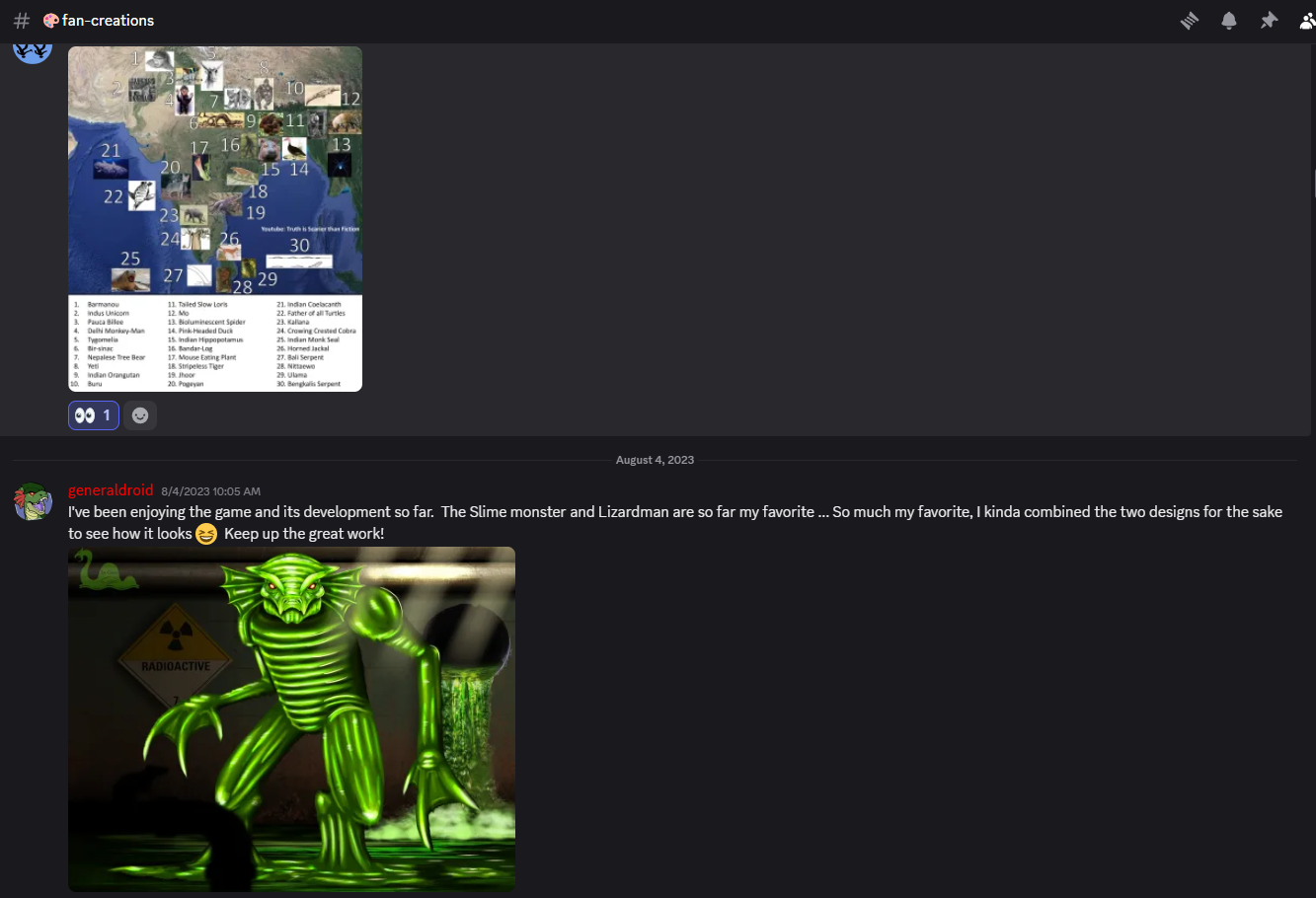
One of the most rewarding outcomes of building such an engaged community was seeing players take the world of A DAY OUT and make it their own. Players created lore, artwork, videos, streams, guides, and all kinds of other content inspired by the game. Rather than simply watching this happen, I wanted to actively encourage it by giving the community the tools and spaces to share their work.
I created dedicated Discord channels for Community Lore, Fan Creations, and Spooky Stories, along with a Content Creator role to recognize players who contributed to the community. This gave creators a place to showcase their work while making it easier for other players to discover and engage with it. Content also spread beyond Discord, with players sharing their creations through social media, YouTube, streams, and the Steam Community Hub.
- Lore Template — I created an optional template that made it easy for players to write their own A DAY OUT lore without having to figure out formatting or where to start. It provided enough structure to encourage participation while leaving plenty of room for players to create their own stories and ideas within the game’s universe.
- Content Creator Role — Created a Discord role to recognize players who contributed artwork, lore, videos, streams, and other content. Beyond rewarding existing creators, the role became an incentive for others to start creating and sharing their own work.
- Community Guides — Players created their own guides to help newcomers understand the game. These became an unexpected but valuable source of design feedback, showing me how players interpreted our levels, what they found difficult, and which mechanics or encounters stood out to them.
What made this especially rewarding was seeing the community expand upon a world that we had created. Their work gave A DAY OUT an identity beyond the game itself and created conversations that we could never have produced on our own.
For me, this was one of the clearest signs that the community had become more than an audience. They were participants in the world we were building—creating their own stories, helping other players, sharing the game with new audiences, and ultimately contributing to the game’s identity in ways I never could have planned for..
BACK