OXALIS
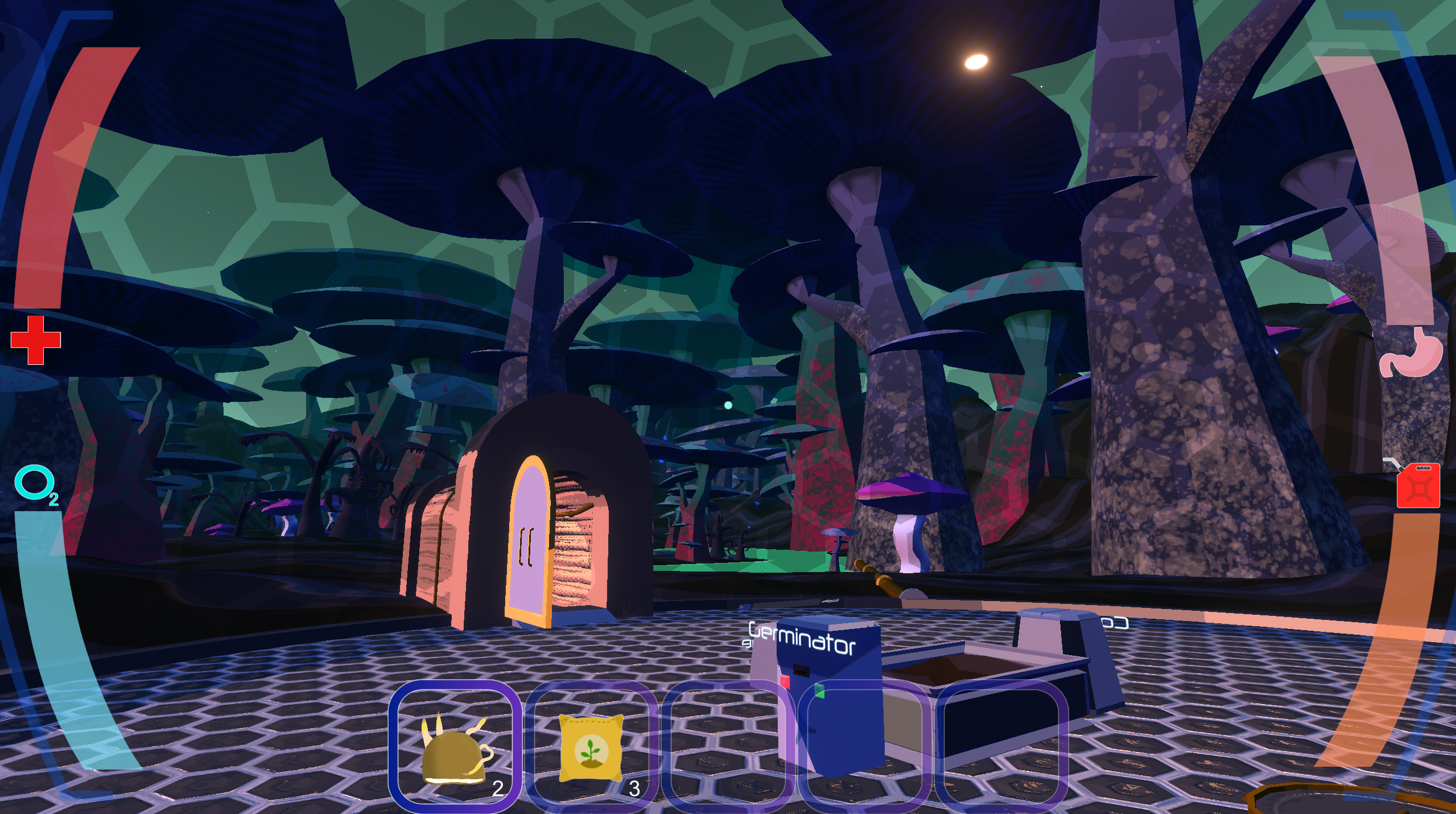
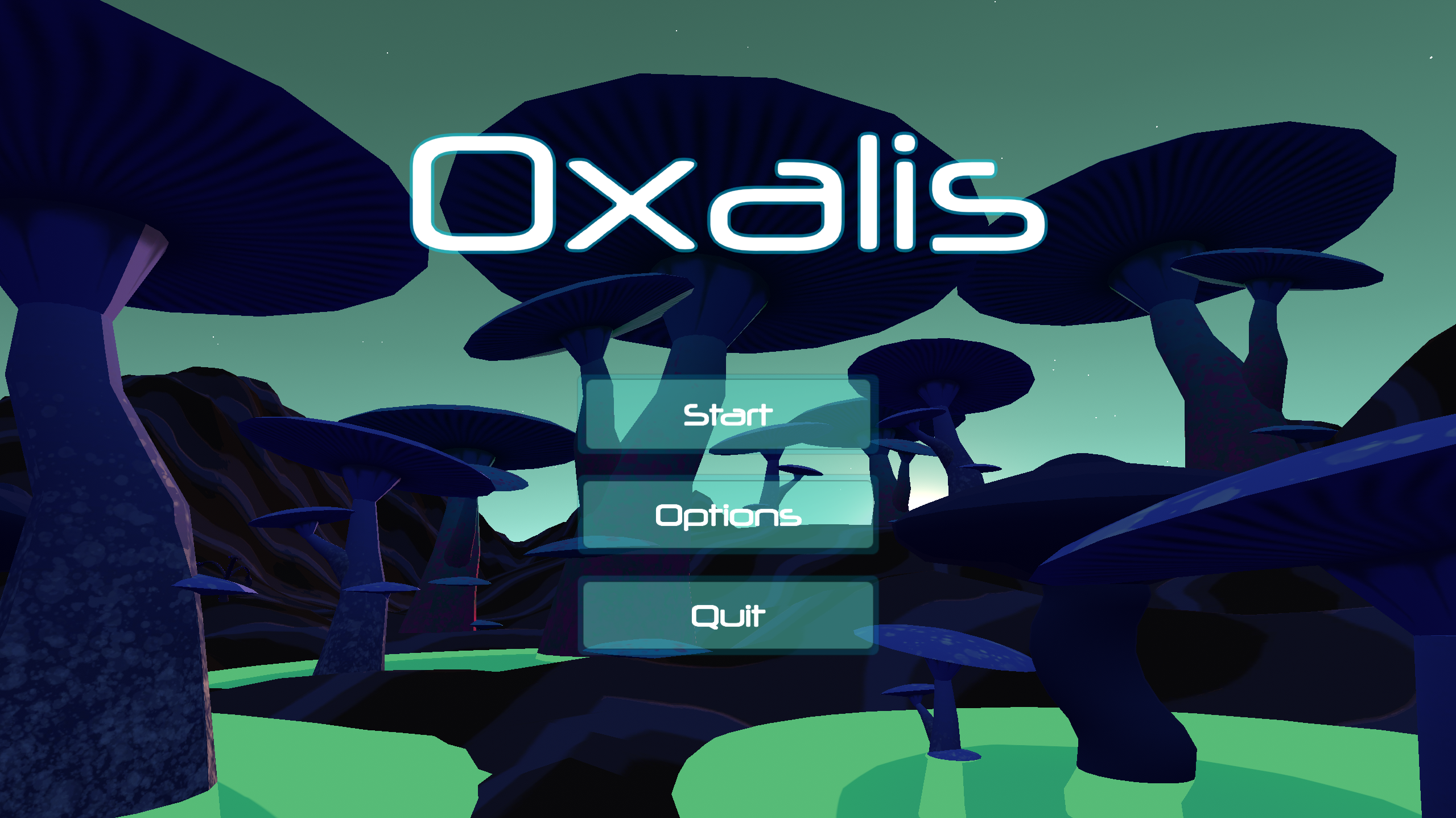
A Sci-fi farming sim that takes place on a small planet named Oxalis. Explore the environment searching for alien plants and farm to survive.
- Date. Feb 2021 – May 2021
- Role. Level Designer
- Team-size. 7
- Purpose. University Project
- Tools: Photoshop, Unity.
Highlights
- Published on itch.io
- Learned more about the Unity workflow
- Ranked #1 out of all games presented for that class
- Earned us an A grade (that’s pretty good too!)
As the main Level Designer, I drove the project’s focus on exploration and atmosphere. This was achieved through intentional reference gathering, continuous iteration, and rigorous playtesting to ensure the environment felt immersive and engaging.
Starting The Project
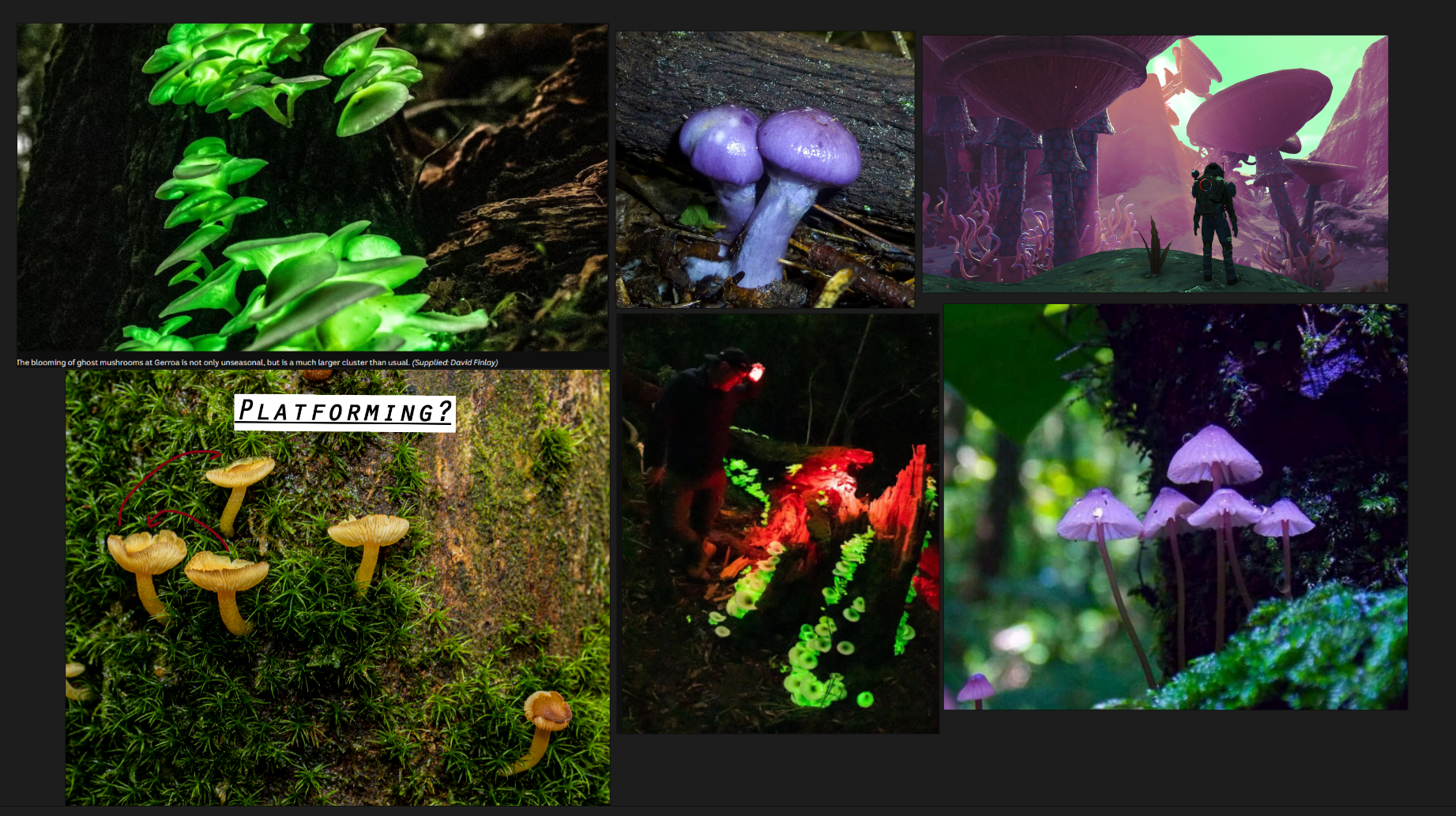
I begin every project by gathering visual and thematic inspiration. This usually involves studying environments, moods, and references that align with the experience I want to create.
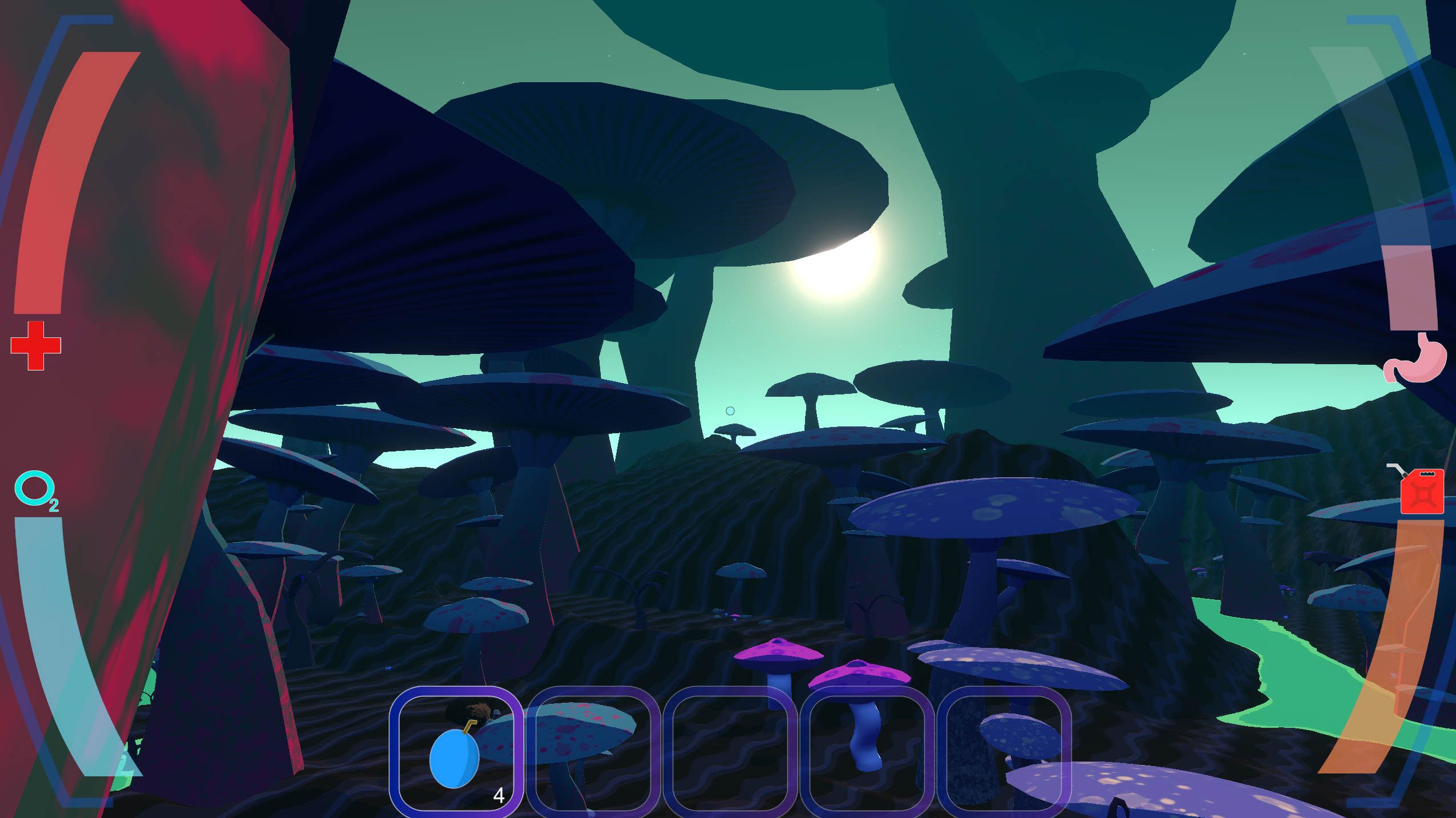
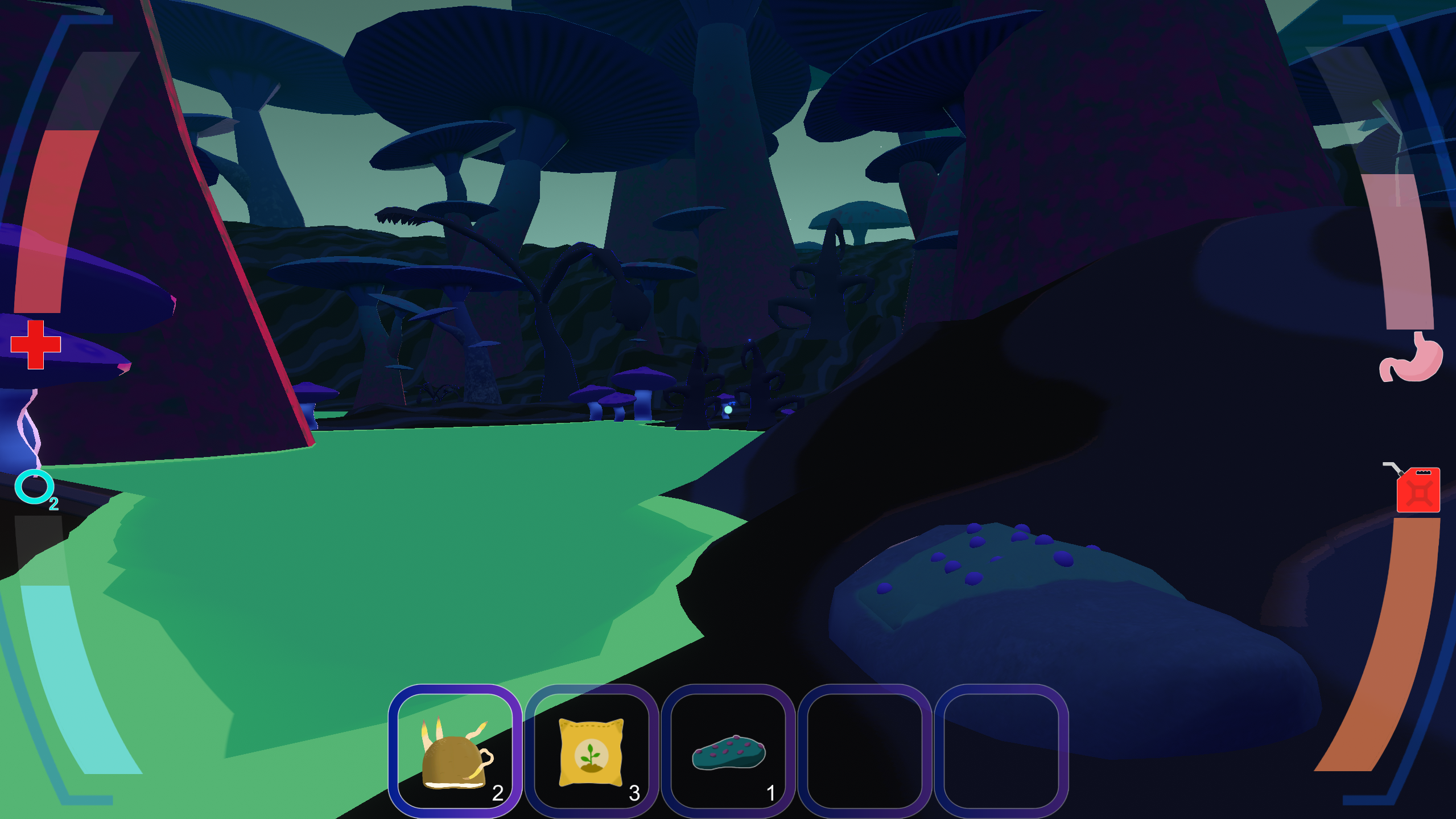
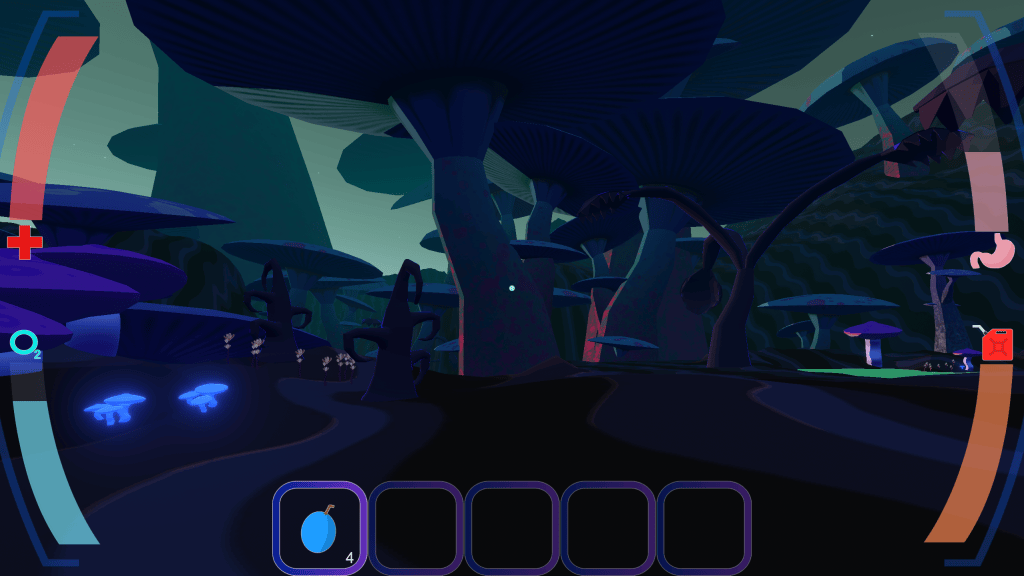
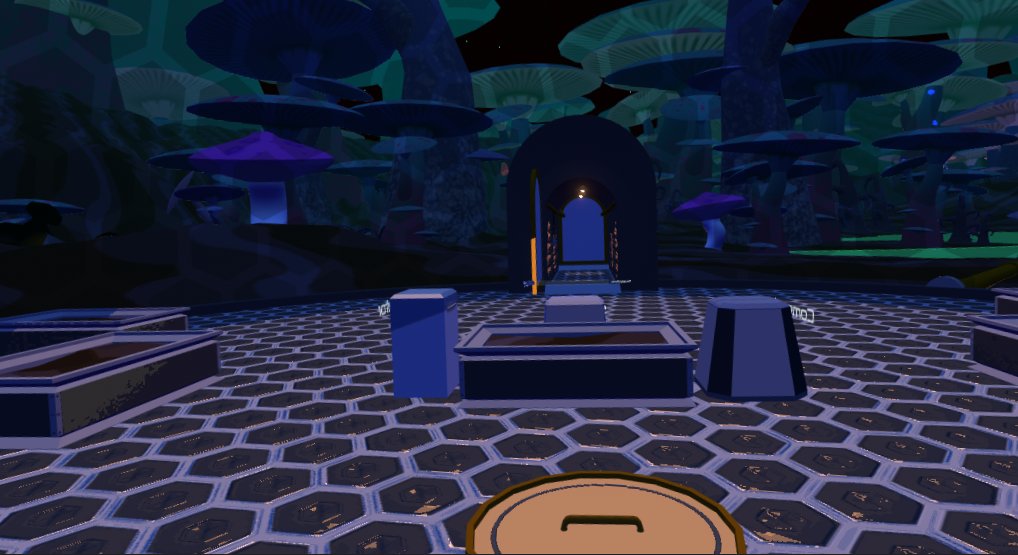
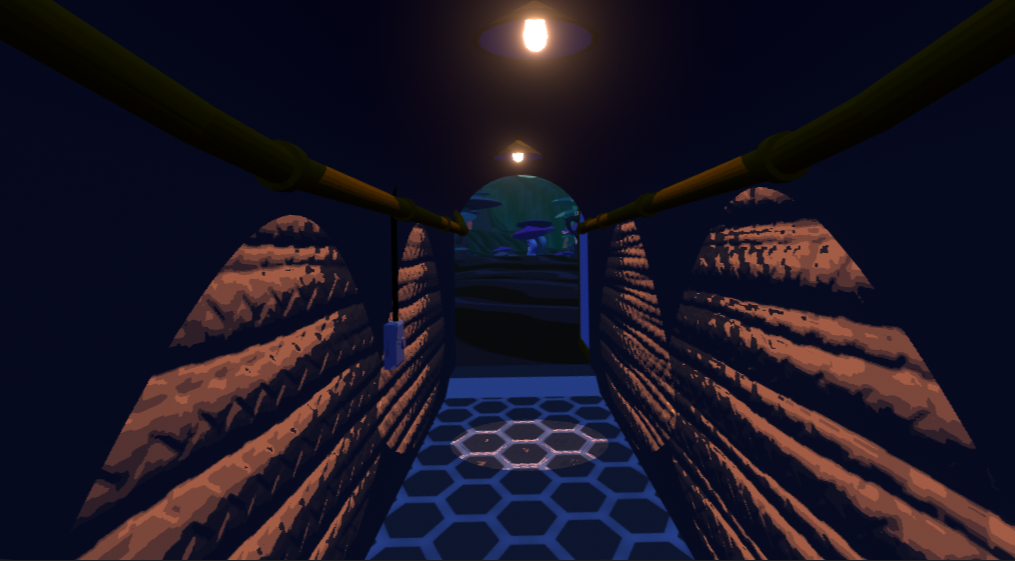
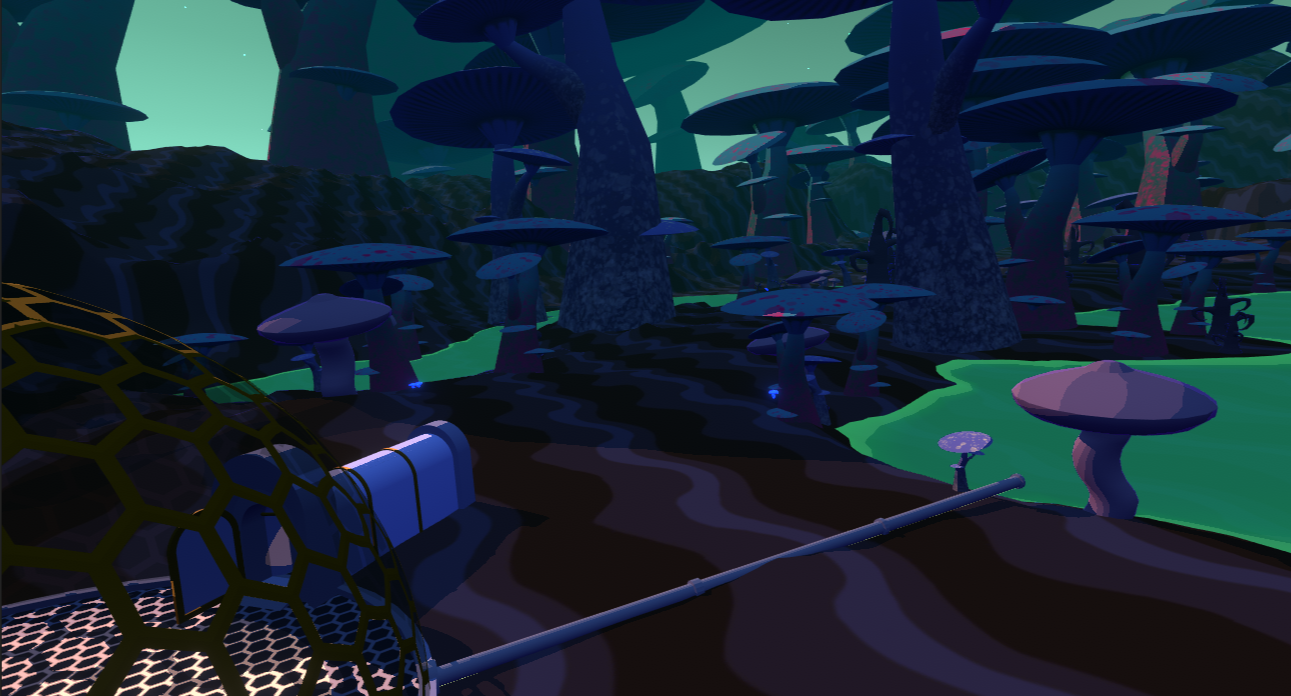
When designing Oxalis, I drew from both real-world nature and similar media to ground the environment in something believable while still feeling otherworldly.
This phase ensures that all design decisions are grounded in a cohesive vision before production begins.
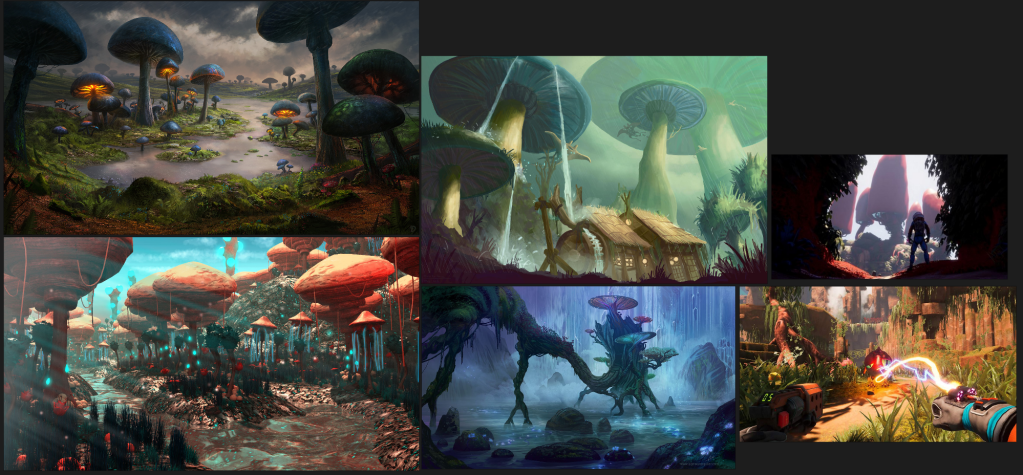
Other Media:
Nature documentaries were a key reference for this project, helping inform scale, color, and ecological details. Fungi & other Terrestrial plants really helped shape the mood board
Fungi-based imagery — helped ground the alien world in recognizable organic forms
Mood boards — used to establish visual consistency, tone, and overall direction. Mostly just a ton of photos, videos, sounds, that I felt represented the tone I wanted to achieve.
Other media — games like No Man’s Sky and various farming sims were helpful in understanding how other games handle similar mechanics, pacing, and environments.
Design Philosophy & Skills Demonstrated
I design levels with the mindset that every space should serve a purpose — whether it’s guiding the player, reinforcing tone, or supporting mechanics — and that fun always comes first. This project demonstrates my approach to level design, with an emphasis on:
- Gameplay-first environment design
- Mechanics-driven layout decisions
- Clear player flow and spatial readability
- Iterative design driven by feedback
- Strong documentation and communication
- Collaboration with other designers
- Grayboxing and scale validation
Workflow
With some of the core mechanics and gameplay loop defined, I began structuring the world—planning POIs, base layout, and player flow. Nothing was treated as final; each element was iterated on and adjusted based on how it performed in-game. I know iteration is one of the biggest factors in my workflow. Afterall, games really are a product of iteration!
- Mood Boards
- Plan POIS
- Early Player Flow
- Team Discussion
- Mechanics
Paper Mapping & Layout Planning
First / Rough Draft
This stage allows me to fail fast and iterate cheaply before moving into more time-intensive production. At this point, I usually have a rough idea of planned mechanics and the core gameplay loop, which makes this stage much more effective. Usually drawn on paper or with minimal detail in Photoshop.
- Organizing ideas quickly
- Testing early layout concepts
- Understanding potential player flow
- Identifying POIs, hazards, and progression beats
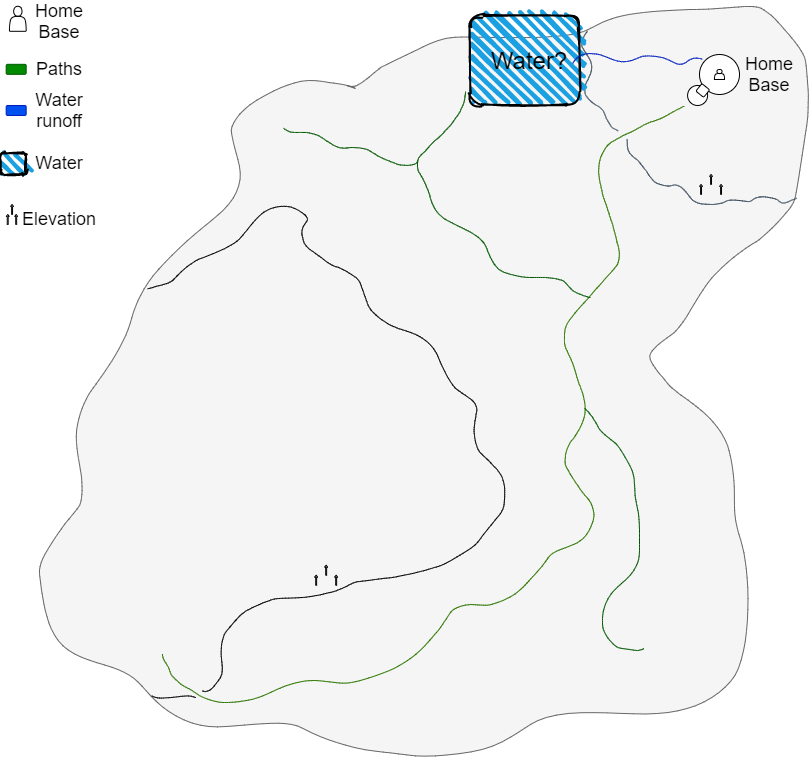
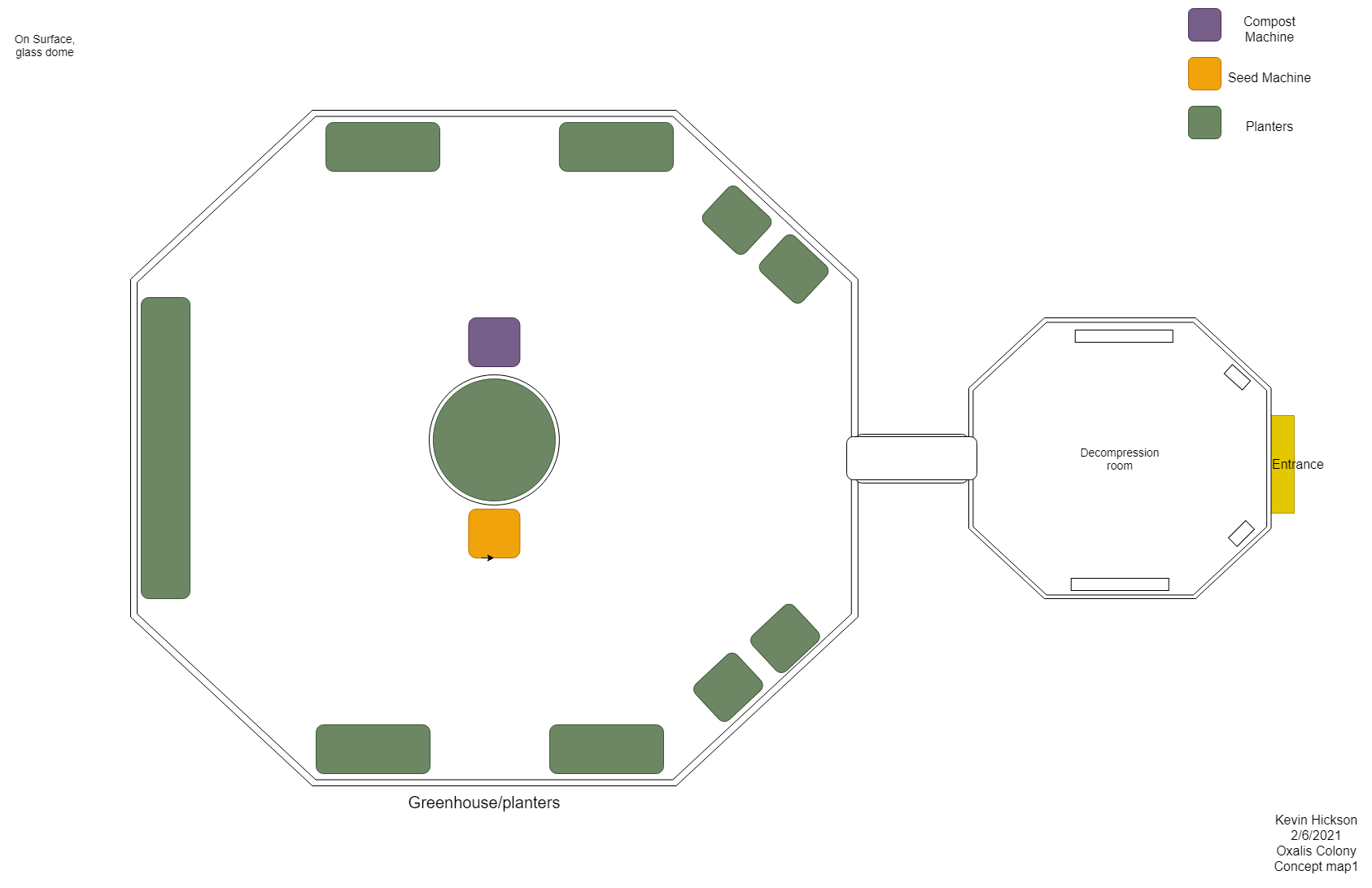
Paper Map v1
After validating the initial concept, I create a refined paper map to further test:
- Spatial relationships between areas
- POI placement and pacing
- Navigation clarity and overall flow
This version acts as a blueprint for the level and directly informs the blockout phase.
Clean Digital Map
Once the paper map feels solid, I convert it into a clean digital layout.
This step is crucial for collaboration, as it ensures:
- Clear communication between team members
- Easy readability and shared understanding
- A reliable reference throughout development
Blocking Out the Level
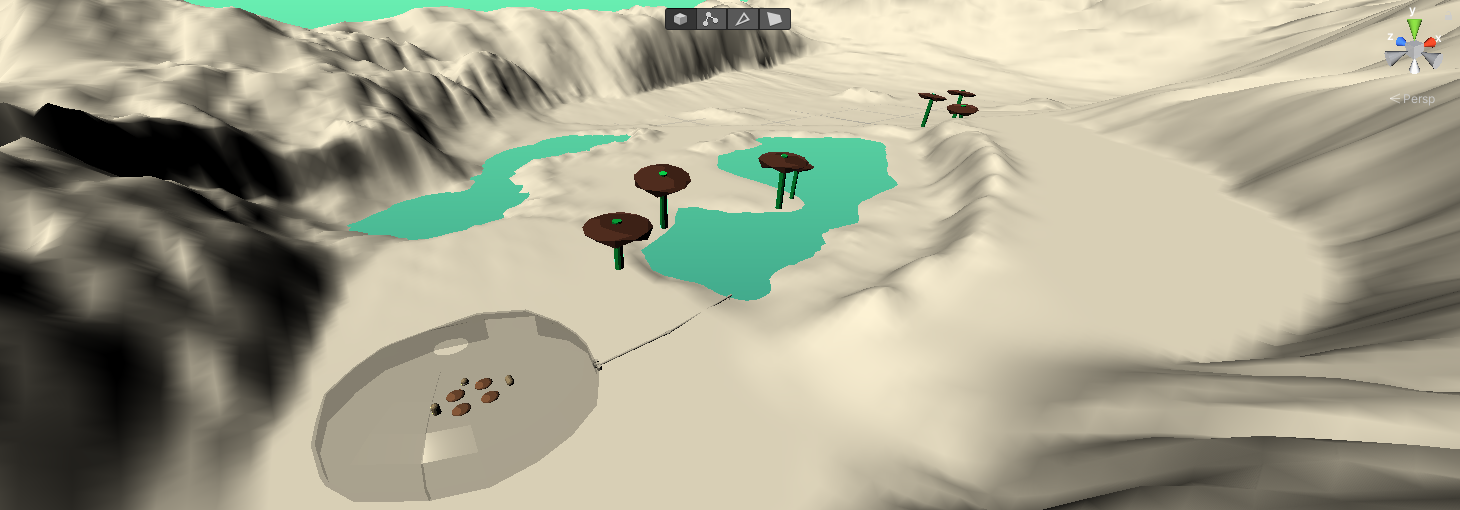
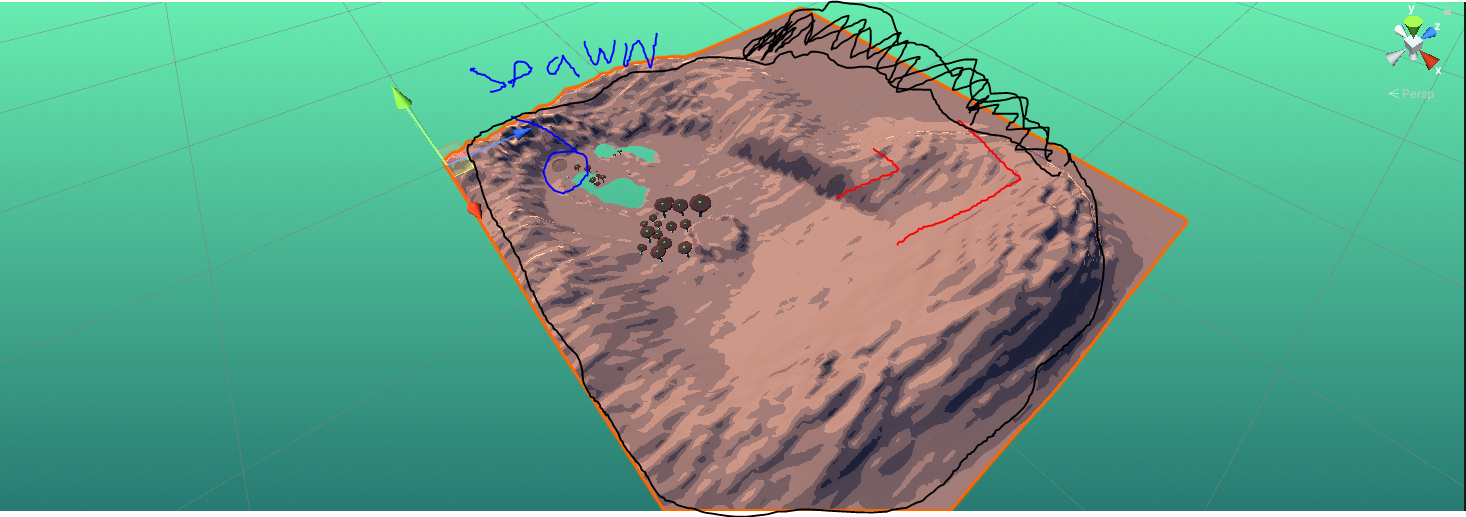
First Pass
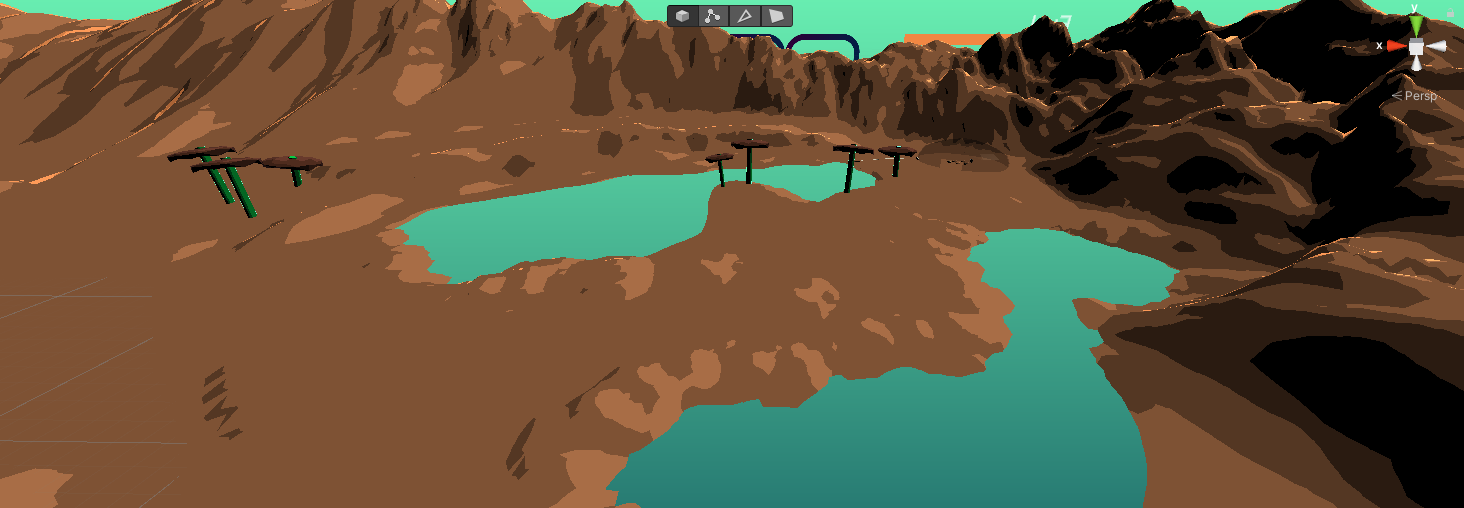
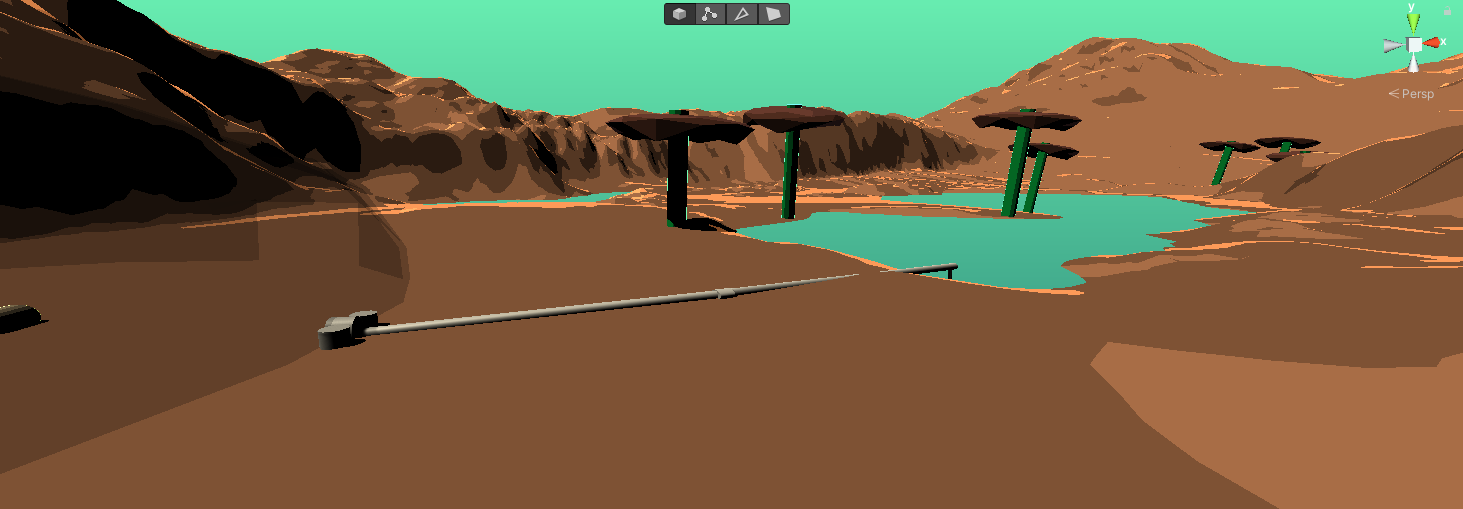
With the layout established, I move into the engine (in this case, Unity) to begin blocking out the level. This is one of — if not the — most important parts of my design process. Maps are great for organizing ideas, but you don’t truly know how something feels until you play it.
My focus during blockout is:
- Player scale and proportions
- Traversal flow and pacing
- Readability of spaces before art is introduced
I typically start with:
- Basic terrain (if applicable)
- Simple geometry to define spaces, routes, sightlines, POIs, world actors, and encounters
This stage is also extremely helpful for visualizing the world in-engine, especially for designers who prefer spatial iteration over abstract layouts.
If a character model is available, I place it in the scene to ensure accurate scaling. If not, I use placeholder geometry based on standard engine character dimensions or established character height. This may also apply to NPCs if they are able to patrol or traverse these spaces.This ensures the level plays well before it looks good.
Verticality & Platforming Through Environment
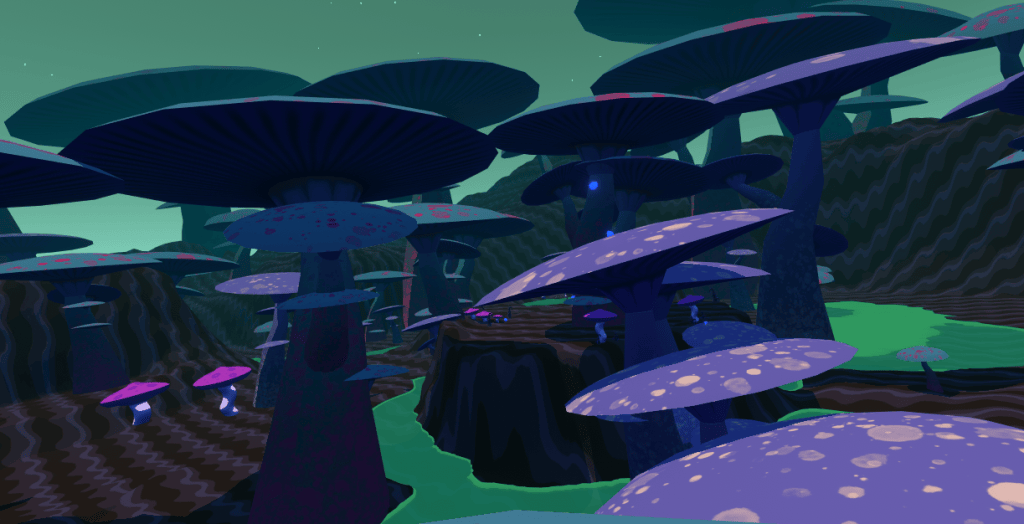
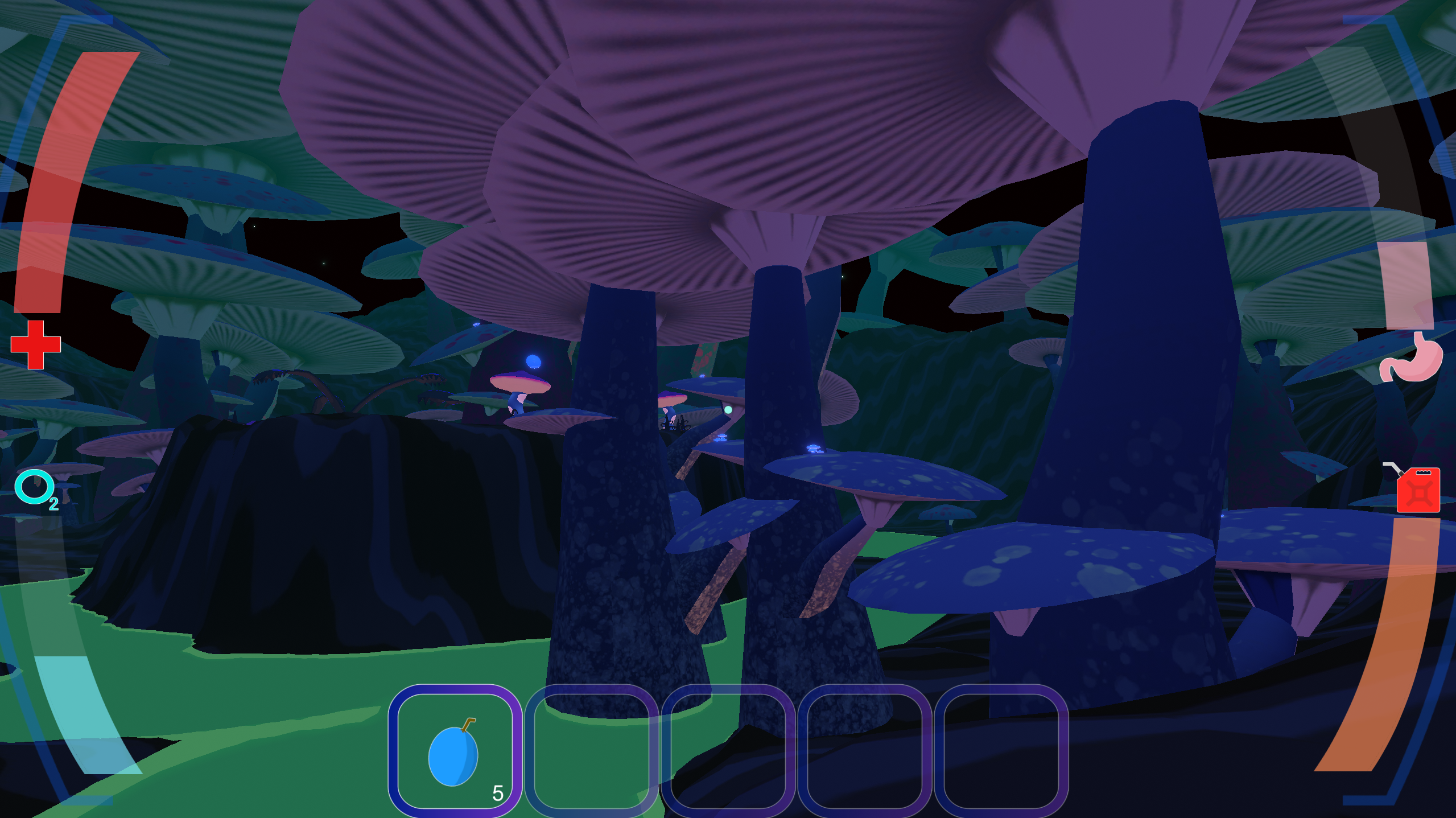
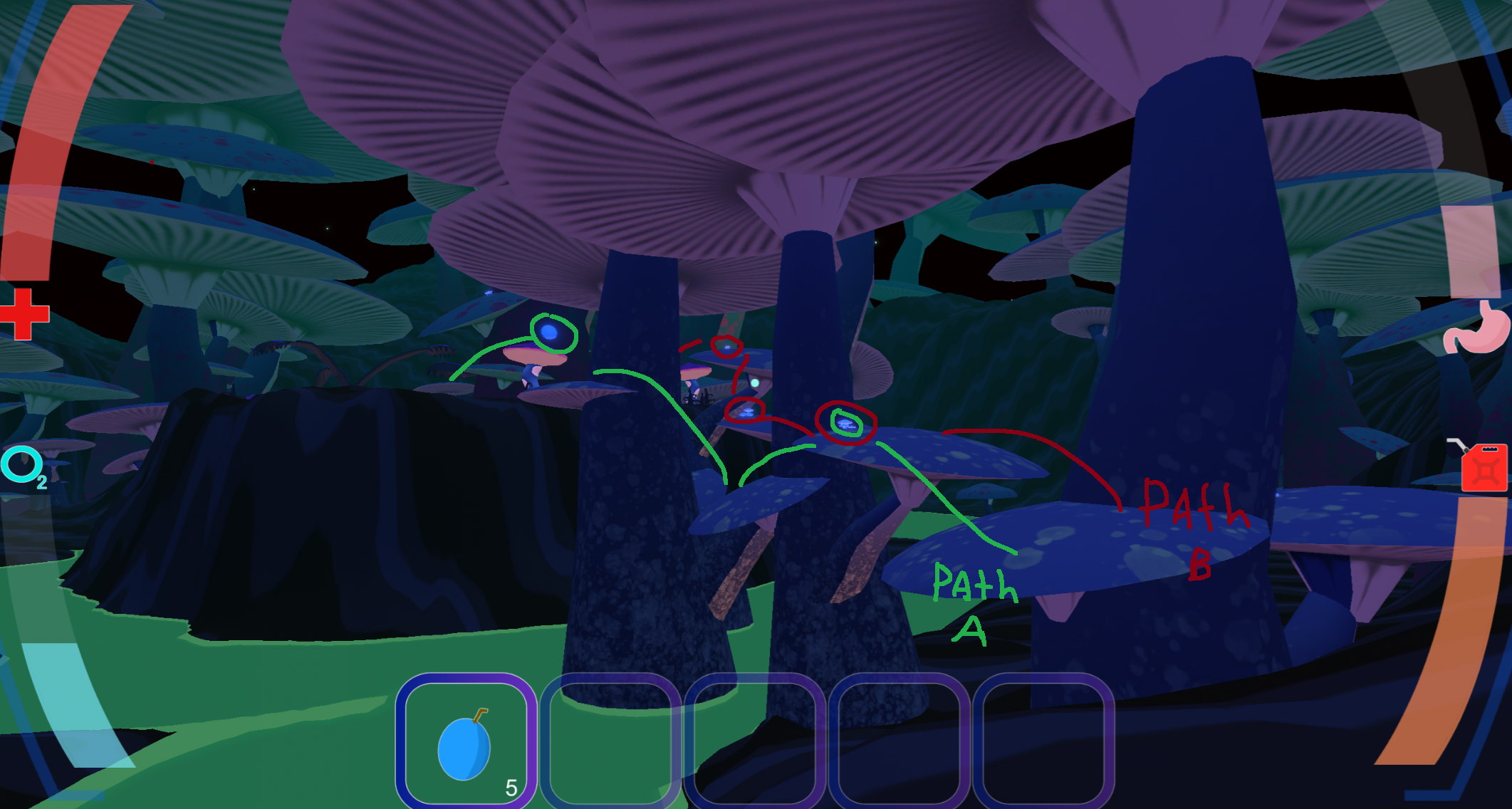
Early on, I also pitched the idea of using the planet’s mushrooms as natural platforms.
This decision allowed us to
- Introduce light platforming in an organic, believable way
- Add much-needed verticality to the map
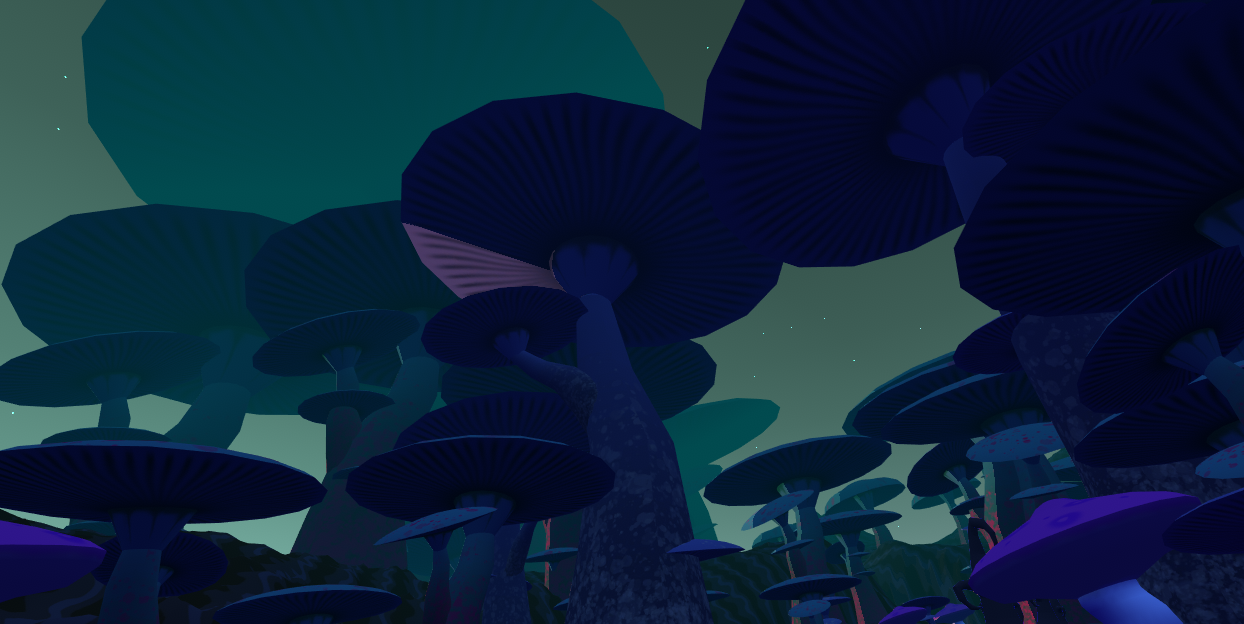
- Reinforce the swampy, alien atmosphere of the environment
By integrating traversal mechanics directly into the environment, the level remains engaging to move through while reinforcing the world’s identity.
Iteration & Feedback
After completing the initial blockout, I playtest the level and gather feedback from testers and team members. This step is crucial.
As the designer, I already know where triggers, encounters, and scripted moments are placed. Having fresh players experience the level allows me to understand whether spaces read clearly, feel engaging, or need further refinement before expanding on them.
Iteration is a core part of my workflow. As development progresses, many factors may change, including:
- Gameplay mechanics
- Art style
- Narrative needs
- Player abilities and movement
Because of this, I continuously refine the level to support the evolving needs of the game.
The number of iterations depends on scope and timeline, but my goal is always to deliver the best possible experience within production constraints — without ever losing sight of fun.
Mechanics-Driven Environment Design
A key part of my approach is ensuring that level layout and environment design directly support gameplay systems.
Player Needs & Organic Guidance
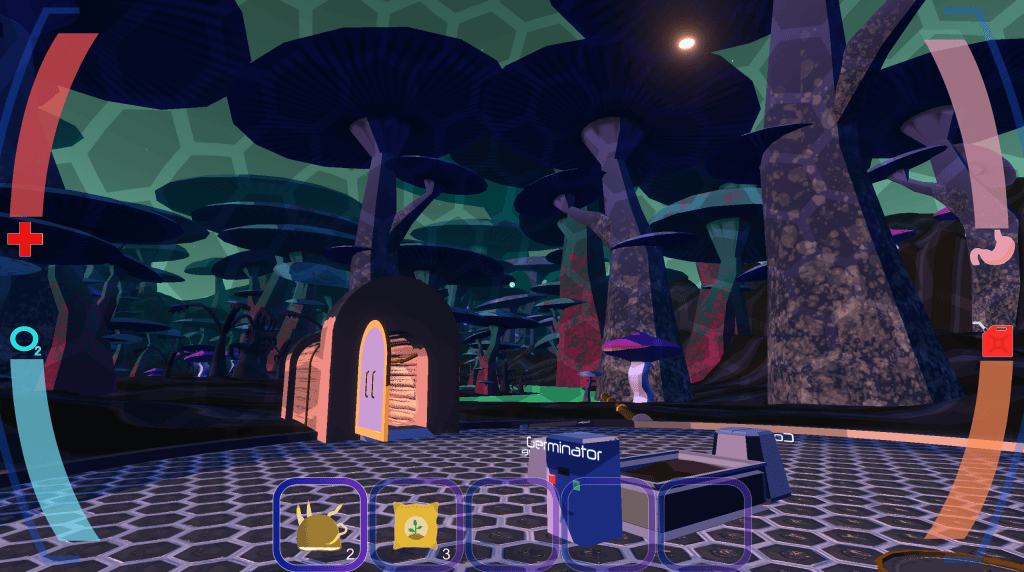
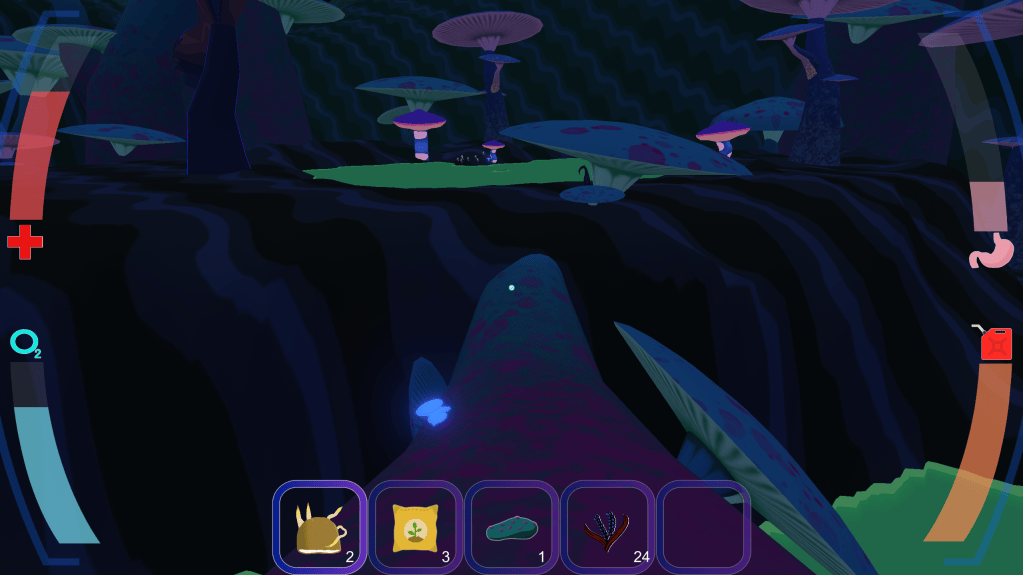
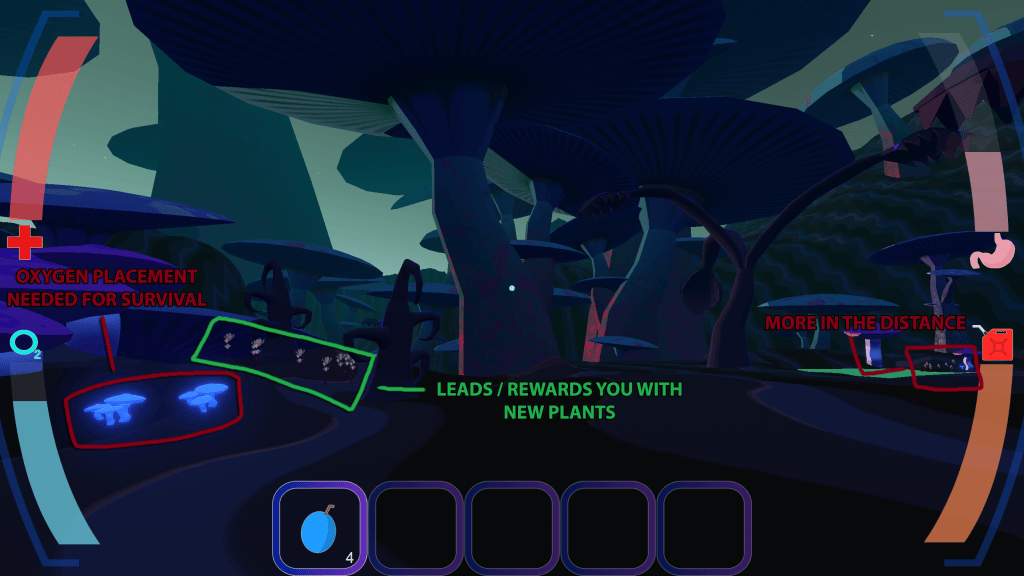
When exiting the DOME (the safe home base), the player’s survival needs begin to tick — such as oxygen levels, food, and other resources. I used this mechanic to naturally guide players through the environment without relying on overt wayfinding.
By carefully placing oxygen-replenishing plants, I was able to:
- Create subtle “paths” that guide players toward POIs
- Encourage exploration while maintaining tension
- Present meaningful risk-reward decisions
Players are constantly faced with questions like:
Do I stray farther from the oxygen plants to explore this area, or play it safe?
This same system informed the placement of harvestable plants. The farther players venture from the DOME, the rarer the plants they discover. This design encourages players to push farther with each expedition, rewarding curiosity and risk with better resources.
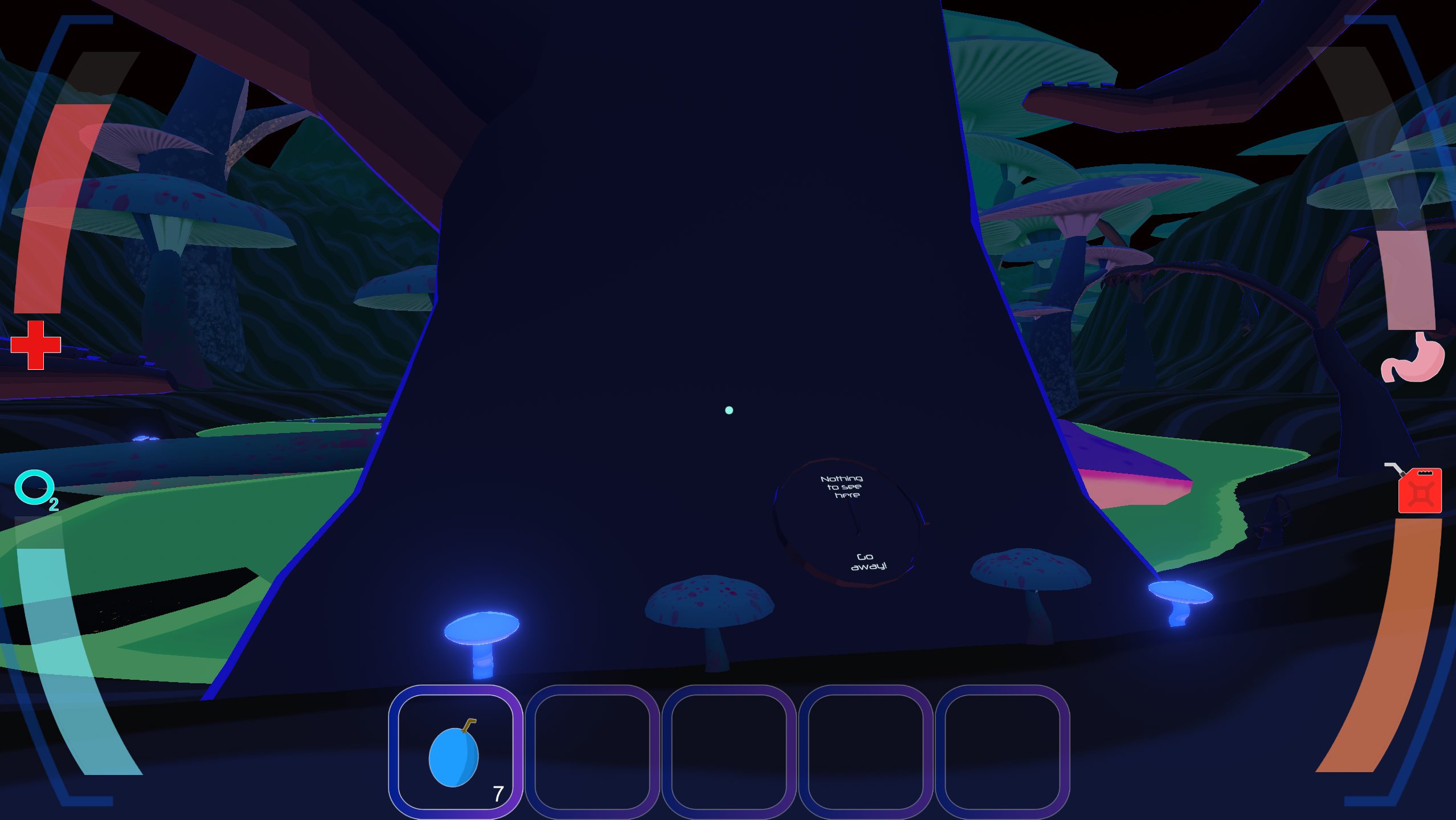
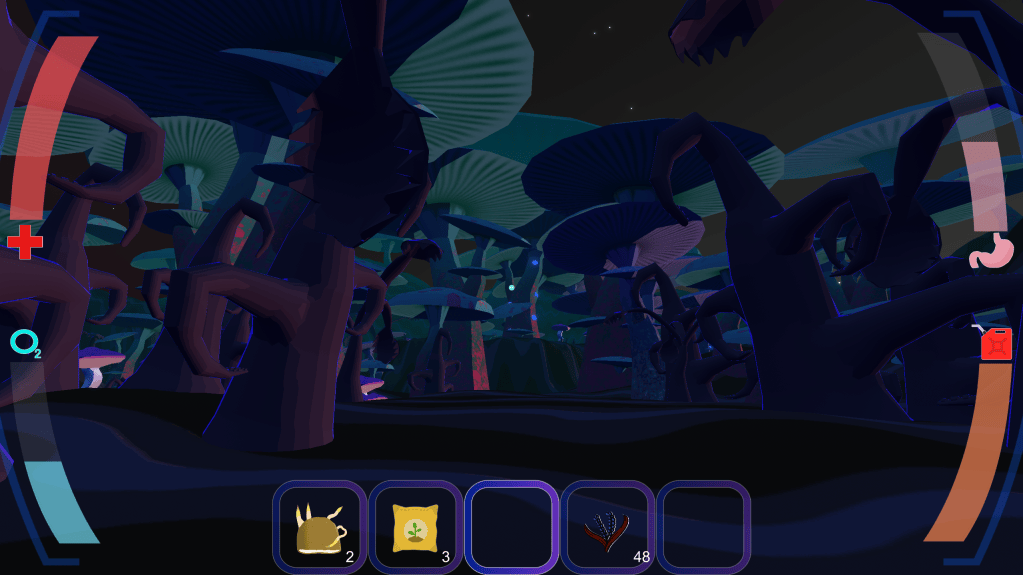
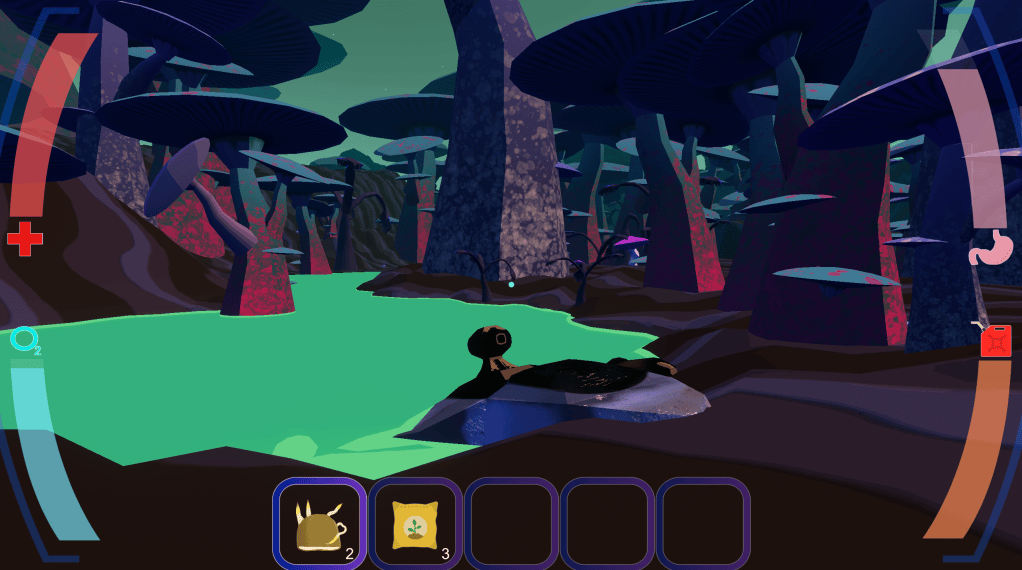
Pushing Exploration
POIs and hidden Easter eggs played a key role in encouraging exploration, giving players meaningful reasons to venture off the main path and discover the world.
- More Rewarding Plants to discover
- Interesting things to discover
- Easter Eggs and other hidden
- More Lore to uncover
Landmarks
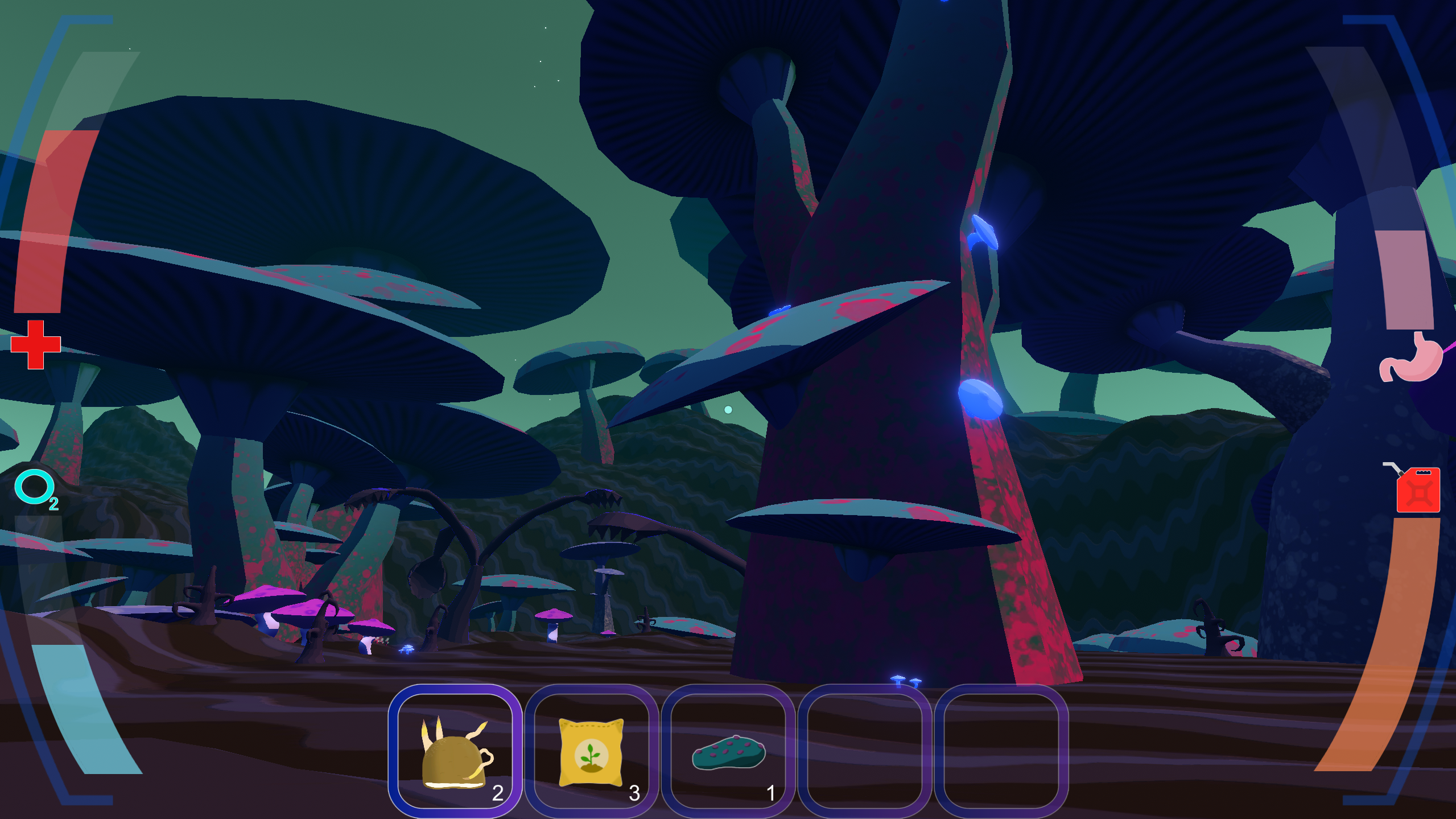
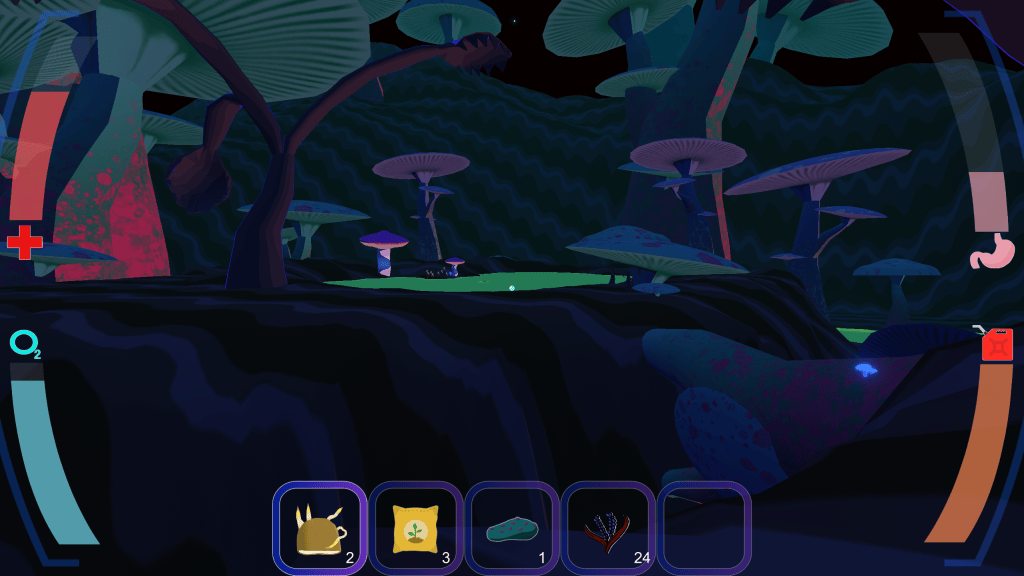
Landmarks can take many forms. In this project, incorporating natural landmarks presented a unique challenge. To address this, I leaned into the environment itself, using terrain, composition, and visual contrast to guide player navigation.
- Largest Mushroom covered in glowing blue oxygen plants
- Specific Placement of props like the overhanging Forest
Finalizing the Map
Once the layout has been refined through iteration, I move into finalization.
This includes:
- Cleaning up or replacing geometry
- Ensuring flow and readability are clear
- Confirming the level supports gameplay, story, and player expectations
- Replacing placeholder textures
- Finalizing lighting, art, and layout — this is when the cake is fully baked
Clear, well-documented layouts are especially important when working on a team. They allow for smoother handoff across disciplines and help avoid wasted time on issues that could have been identified earlier in development (e.g., “this area is kinda boring”).
Final Thoughts:
This was one of my favorite projects from university, largely because of how well the team worked together. Communication was strong, meetings were efficient, and the overall development process was genuinely enjoyable. Looking back now, I can see how much I’ve grown as a level designer. Some areas feel a bit empty, and I’d love to revisit them by adding more environmental detail—alien-like rocks, dense foliage, and atmospheric elements like bugs or swamp gas—to really push the swampy tone and sense of danger.
 KevTheDevGames